
Moving a dog or cat from Turkey to Europe requires careful preparation because Turkey is outside the European Union. The journey may involve veterinary documentation, rabies vaccination requirements, laboratory testing, an officially designated EU entry point, and airline-specific transportation rules.
The most important thing to understand is that there is no single “Europe-wide travel checklist” that covers every practical detail. The requirements depend on the destination, the status of the movement, and the route selected.
Delivery Animal can help coordinate the transportation of dogs and cats from Turkey to European destinations, including route planning and document coordination.
Pet Transportation from Turkey to Europe: Where to Start
The first step is to establish the exact destination and determine whether the journey is non-commercial pet travel or a commercial movement.
For a typical private relocation, the EU rules cover dogs, cats and ferrets travelling without a change of ownership. Commercial movements and transfers of ownership can fall under different requirements.
Before arranging the journey, it is therefore important to establish:
- the final European country;
- the country of departure;
- whether the owner is travelling with the pet;
- the number of animals;
- the planned route;
- the transportation method;
- whether any transit countries are involved.
This information determines which documents and procedures need to be arranged.
Pet Transportation from Turkey to Europe: Microchip Requirements
Identification is one of the fundamental requirements for international pet travel.
The animal should have a compliant microchip, and the identification information must correspond with the veterinary documentation.
The timing of identification and rabies vaccination is also important. Under EU rules, the date of rabies vaccination cannot precede the date of identification or microchip reading where the vaccination is being used to meet the relevant requirements.
For this reason, the microchip number should be checked carefully before any certificates are issued.
Pet Transportation from Turkey to Europe: Rabies Vaccination
Rabies vaccination is a central requirement for dogs and cats entering the EU.
For a primary vaccination, the animal must be at least 12 weeks old, and the vaccination becomes valid for travel only after the required waiting period has passed. The EU currently specifies a minimum of 21 days after completion of the primary vaccination protocol.
This means that last-minute travel planning can be difficult if the pet has never previously received a valid rabies vaccination.
Pet Transportation from Turkey to Europe: Rabies Antibody Test
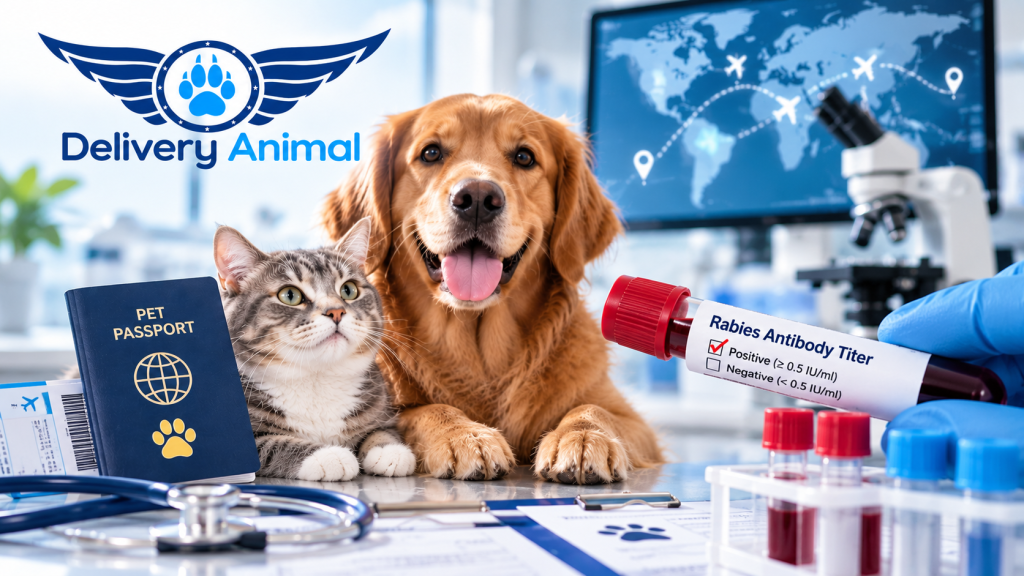
One of the most important points for a Turkey-to-EU journey is whether a rabies antibody titration test is required.
The EU maintains lists of non-EU countries and territories from which pets can enter without this test. Where the applicable country is not included in the relevant exemption lists, a titration test is required.
For Turkey, this requirement should be checked carefully before the journey is planned.
The European Commission also maintains an official list of designated laboratories for rabies antibody testing. The list includes a designated laboratory in Türkiye.
Because the timing of vaccination, blood sampling and travel can affect eligibility, this part of the preparation should be started well in advance.
Pet Transportation from Turkey to Europe: Animal Health Certificate
Pets entering the EU from a non-EU country generally need an Animal Health Certificate (AHC) when travelling under the applicable non-commercial rules.
The European Commission states that an animal health certificate issued for entry from a non-EU country is valid for 10 days from the date of issue for entry into the EU. After the required documentary and identity checks, it can remain valid for onward travel within the EU for up to six months, or until the rabies vaccination expires, whichever comes first.
The timing of the certificate is therefore extremely important.
Pet Transportation from Turkey to Europe: EU Entry Point
The first point of entry into the EU is another important part of the route.
Dogs, cats and ferrets entering the EU from a non-EU country generally need to pass through an officially designated Travellers’ Point of Entry, where documentary and identity checks are carried out.
This means that a route should not be selected solely according to ticket price or flight duration. The entry airport must also be suitable for the pet’s arrival procedure.
Pet Transportation from Turkey to Europe: Germany, Italy, France and Spain
Delivery Animal can arrange routes from Turkey to destinations across Europe, including:
- Germany;
- Italy;
- France;
- Spain;
- the Netherlands;
- Belgium;
- Austria;
- Czechia;
- Poland;
- Slovakia;
- Hungary;
- Greece;
- Bulgaria;
- Romania;
- and other European destinations.
The applicable requirements should always be checked for the specific country and route. The European Commission provides country-specific information covering national measures and additional requirements.
Pet Transportation from Turkey to Europe: Airline Transportation
Flying is often the most practical option for long-distance relocation from Turkey.
However, airline rules are separate from government veterinary requirements. An airline may have its own restrictions concerning:
- cabin transportation;
- checked or manifest cargo;
- maximum dimensions;
- total weight;
- approved travel crates;
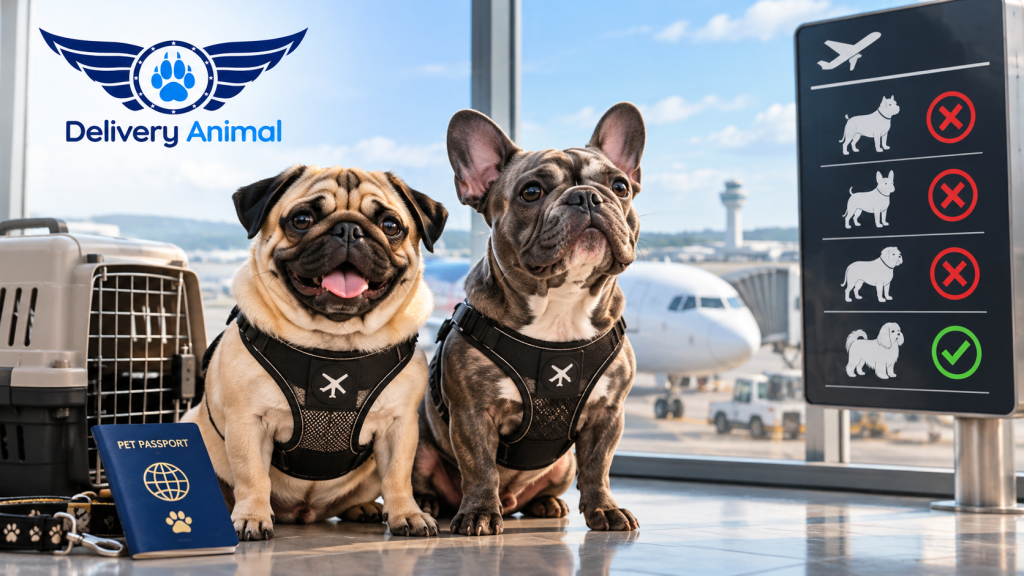
- breed restrictions;
- weather conditions;
- connecting flights.
Therefore, an itinerary should be confirmed with the airline before final travel arrangements are made.
Pet Transportation from Turkey to Europe: Large Dogs
Large dogs require additional logistical planning.
The dimensions of the animal and its travel crate can affect the available flights and aircraft. Some routes that are suitable for a small cat may not be suitable for a large dog.
For this reason, the dog’s measurements should be established before selecting the final itinerary.
The transportation crate should comply with the carrier’s requirements and provide the animal with sufficient space to stand, turn around and lie down comfortably.
Pet Transportation from Turkey to Europe: Preparing Your Pet
Preparation is not limited to paperwork.
A pet that has never travelled in a crate may benefit from becoming familiar with it before the journey. Keeping the usual routine as consistent as possible can also make the transition easier.
Before departure, owners should check:
- microchip information;
- rabies vaccination;
- antibody testing, if applicable;
- veterinary certificates;
- airline requirements;
- crate requirements;
- transit arrangements;
- EU entry-point requirements.
Pet Transportation from Turkey to Europe with Delivery Animal
Delivery Animal helps organize international relocation for dogs and cats travelling from Turkey to Europe.
The service can include:
- route planning;
- document coordination;
- veterinary preparation;
- airline coordination;
- transportation arrangements;
- transit planning;
- delivery to the final destination.
Each journey is planned individually because the appropriate route for a small cat can be very different from the route required for a large dog.
Expert Conclusion: Pet Transportation from Turkey to Europe
Pet Transportation from Turkey to Europe should be planned around the official EU entry requirements rather than around the flight schedule alone.
The European Commission’s official guidance for dogs, cats and ferrets entering the EU confirms that requirements can include identification, valid rabies vaccination, an animal health certificate, rabies antibody testing where applicable, and entry through a designated Travellers’ Point of Entry.
For a Turkey-to-Europe journey, the most important practical step is to establish the exact destination and route first. Only then can the required veterinary procedures and document deadlines be planned correctly.
It is also important to distinguish private non-commercial pet travel from commercial transportation or a transfer of ownership, because different EU legislation may apply.
A carefully planned route reduces the risk of document discrepancies, unsuitable connections or problems at the EU border. Delivery Animal can coordinate the transportation process from Turkey to Europe, adapting the route and preparation to the individual pet and destination.
FAQ About Pet Transportation from Turkey to Europe
Can I transport my dog from Turkey to Europe?
Yes. Dogs can enter the EU from Turkey when the applicable animal-health and entry requirements are fulfilled.
Can I transport my cat from Turkey to Europe?
Yes. Cats are covered by the EU rules for pet movement, including identification, rabies vaccination and the applicable veterinary documentation.
Is a rabies antibody test required?
It depends on the applicable EU country list and the circumstances of the journey. This should be verified before planning the travel date.
Can a pet enter Europe through any airport?
Not necessarily. Pets entering the EU from a non-EU country generally need to use a designated Travellers’ Point of Entry.
How early should I start preparing?
The earlier, the better—especially if a primary rabies vaccination or antibody titration test is required. The necessary waiting periods can make last-minute international travel impossible.