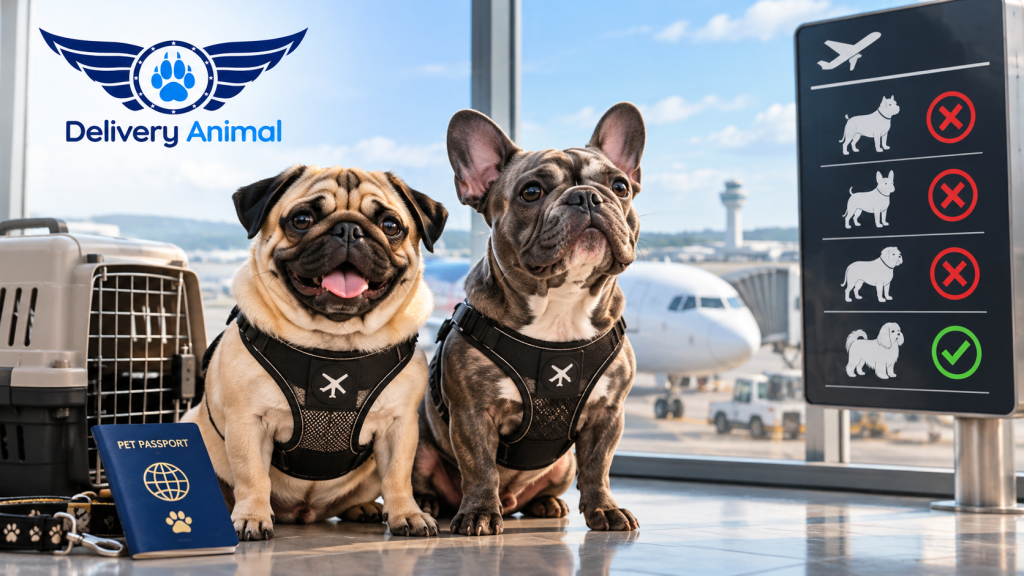

If you are planning an international journey with your pet, you may be wondering which dog breeds that cannot fly are affected by airline restrictions in 2026. This is particularly important for owners of Pugs, French Bulldogs, English Bulldogs, Pekingese, Boston Terriers, and other short-nosed dogs.
These dogs are commonly described as brachycephalic. Their shortened skull shape can be associated with narrowed airways and breathing difficulties, which may increase the risks of air travel, especially in hot or stressful conditions.
However, there is no single worldwide list of dog breeds banned by every airline. Some carriers restrict certain breeds from travelling in the aircraft hold, some exclude them from cargo services, and others may accept eligible small dogs in the passenger cabin under specific conditions.
Therefore, when checking dog breeds that cannot fly, owners must consider the airline, route, transportation method, transit arrangements, and the individual dog’s health. Delivery Animal helps pet owners plan international transportation while taking route-specific requirements and airline restrictions into account.
Which Dog Breeds That Cannot Fly Face the Most Restrictions?
Airline restrictions frequently focus on brachycephalic dogs because of their anatomical characteristics and potential breathing difficulties. The breeds below may face restrictions, but the exact rules vary by carrier.
1. Pugs
Pugs are among the dog breeds that cannot fly on certain routes or under particular airline transportation policies. Their short muzzles and potential airway problems may make it harder to cope with heat, stress, and some travel conditions.
Depending on the airline, a Pug may be refused in the aircraft hold or under a cargo transportation programme. Cabin travel may be possible with certain carriers if the dog meets the weight, carrier-size, destination, and booking requirements.
Never assume that a Pug accepted by one airline will automatically be accepted by another. Always obtain confirmation before booking.
2. French Bulldogs
French Bulldogs are frequently affected by restrictions because of their brachycephalic anatomy. Heat exposure, excitement, and stressful transportation conditions may increase the risk of breathing problems.
When researching dog breeds that cannot fly, owners of French Bulldogs should confirm whether their chosen airline accepts the breed in the cabin, in the aircraft hold, or as air cargo. The permitted transportation method can differ between airlines and routes.
3. English Bulldogs
English Bulldogs can experience significant breathing difficulties and may be less able to tolerate high temperatures. Some airlines exclude Bulldogs from hold transportation or impose additional restrictions on how they can travel.
Even if an airline permits the breed, owners should discuss the dog’s fitness to travel with a veterinarian before departure.
4. Pekingese
Pekingese dogs have shortened muzzles and may fall under the same airline restrictions as other brachycephalic breeds.
Owners should check the permitted travel method, carrier requirements, temperature policies, and documentation requirements before arranging transportation.
5. Boston Terriers
Boston Terriers may also appear on airline lists of restricted snub-nosed dogs. For example, American Airlines Cargo publishes a list of dog breeds and mixes that it does not accept under its cargo programme because of risks associated with respiratory characteristics.
This is why dog breeds that cannot fly must be assessed according to the particular airline’s current rules, rather than assumptions based on breed alone.
6. Boxers, Shih Tzus, and Other Potentially Restricted Breeds
Depending on the carrier, restrictions may also affect Boxers, Shih Tzus, Shar-Peis, Chow Chows, Brussels Griffons, Japanese Chins, Mastiffs, and other breeds.
This is not a universal list of dogs that cannot fly. Some airlines may impose restrictions only on particular transportation methods, while others may have different breed policies. Always check the current rules of the airline operating each flight.
Why Are Some Dog Breeds Not Accepted on Flights?
The main concern is respiratory health. Some brachycephalic dogs have anatomical features that restrict airflow, making it more difficult to breathe comfortably under certain conditions.
Several factors can increase the risks associated with air transportation:
- Heat and humidity: Dogs with compromised breathing may struggle to regulate their body temperature.
- Stress: Unfamiliar surroundings, handling, and transportation can aggravate breathing difficulties.
- Journey duration: Long journeys and connecting flights can increase the time a dog spends exposed to travel-related stress.
- Transportation conditions: Ventilation, temperature, and airport handling procedures all matter.
- Individual health: Age, body weight, existing medical conditions, and the severity of respiratory symptoms affect the dog’s individual risk.
The question of which dog breeds cannot fly therefore depends on more than breed alone. Airline policy, route conditions, transportation method, and the dog’s health must all be considered.
Can Dog Breeds That Cannot Fly in the Hold Travel in the Cabin?
Sometimes. Some airlines prohibit brachycephalic dogs from travelling in the aircraft hold but may allow eligible small dogs to travel in the passenger cabin if they meet the applicable requirements.
For example, Lufthansa publishes special rules for snub-nosed dogs and does not permit these breeds in the aircraft hold. Cabin travel is subject to separate conditions. Other airlines may follow different policies.
Before booking, confirm:
- Whether the airline accepts your specific breed in the cabin.
- The maximum permitted combined weight of the dog and carrier.
- The approved carrier dimensions and construction.
- Whether the route or any connecting airport imposes additional restrictions.
- Whether veterinary documentation or additional approval is required.
- Whether seasonal or temperature-related restrictions apply.
Do not purchase a non-refundable ticket assuming your dog will be accepted in the cabin. Obtain confirmation from the airline first.
Which Dog Breeds Cannot Fly in the Aircraft Hold?
There is no universal list covering every airline. Some carriers prohibit certain brachycephalic breeds from travelling in the hold because of potential health risks.
American Airlines Cargo, for example, publishes a list of breeds and mixes that it does not accept under its cargo programme. Lufthansa also has specific restrictions for snub-nosed dogs, including restrictions on hold transportation.
It is important to distinguish between three different situations:
- An airline does not accept the dog for transportation at all.
- An airline does not accept the dog in the aircraft hold but may permit cabin travel under specific conditions.
- An airline permits transportation only through a particular service or under additional requirements.
When checking dog breeds that cannot fly in the aircraft hold, verify the permitted transportation method for every segment of the journey. A policy that applies to one flight may not apply to a connecting flight operated by another carrier.
Can Dog Breeds That Cannot Fly on Standard Routes Travel as Air Cargo?
Not necessarily. Air cargo is not an automatic way around breed restrictions. Cargo departments may have their own lists of prohibited breeds, temperature limits, route restrictions, and documentation requirements.
Acceptance may also depend on the destination country, connecting airports, journey duration, aircraft type, and the dog’s health.
If standard air transportation is unavailable, owners can explore alternative routes or ground transportation where a suitable service exists and the route is permitted. Any alternative should be assessed for animal welfare, journey duration, and compliance with the relevant countries’ rules.
How to Prepare a Restricted Dog Breed for Air Travel in 2026
If the airline accepts your dog’s breed, preparation should begin well before departure.
Arrange a veterinary assessment. Discuss your dog’s breathing, heat tolerance, existing medical conditions, and fitness for the proposed journey.
Choose the route carefully. Where practical, compare options with fewer connections and shorter airport waiting periods.
Select an appropriate carrier. The container must meet the airline’s requirements and allow the dog to maintain a natural position appropriate to the type of transportation. Check the required dimensions, construction, and ventilation.
Prepare the travel documents. Depending on the route, your dog may need a microchip, vaccination records, a veterinary health certificate, an import permit, or additional tests.
Do not give sedatives without veterinary guidance. Sedation can introduce additional risks, particularly for animals with respiratory problems. Discuss any medication with your veterinarian and check the airline’s policy.
How Delivery Animal Helps Transport Dog Breeds That Cannot Fly on Every Airline
International transportation for brachycephalic breeds requires careful planning. Not every airline accepts these dogs, and restrictions may vary between carriers, routes, and transportation methods.
Delivery Animal helps owners organize international pet transportation, review route requirements, prepare travel documentation, and coordinate a suitable transportation plan.
To begin planning, prepare the following information:
- Your dog’s breed, age, and weight.
- Departure city and country.
- Destination city and country.
- Preferred travel date.
- Whether cabin travel is possible or cargo transportation is required.
Planning an international move with a Pug, French Bulldog, or another short-nosed dog? Contact Delivery Animal to review the restrictions and explore suitable transportation options before booking.
Frequently Asked Questions About Dog Breeds That Cannot Fly
Which dog breeds cannot fly in 2026?
There is no universal list of breeds banned by every airline. Restrictions frequently affect Pugs, French and English Bulldogs, Pekingese, Boston Terriers, Boxers, and other brachycephalic dogs. The final decision depends on the airline and transportation method.
Can a French Bulldog fly internationally?
Sometimes, if the airline accepts the breed for the chosen route and transportation method. Owners should confirm acceptance with the carrier and discuss the dog’s fitness for travel with a veterinarian before booking.
Can a Pug travel in the cabin?
Some airlines may accept small dogs in the cabin if they meet the carrier’s weight and carrier-size requirements. Other airlines have stricter policies. Always check the specific airline’s current rules.
Why are brachycephalic dogs restricted from air travel?
Some short-nosed dogs have narrowed airways and may face an increased risk of breathing difficulties and overheating. Stress and high temperatures can make these problems worse.
Can an English Bulldog be transported as air cargo?
That depends on the cargo carrier’s breed restrictions and acceptance policy. Cargo transportation does not automatically remove breed-related restrictions or health requirements.
What should I do if an airline refuses to transport my dog?
Check whether another carrier permits the breed or whether a different route or suitable ground transportation service is available. Do not assume that another airline will accept the dog without confirmed approval.
How can I find out whether my dog’s breed can fly internationally?
Contact the airline with your dog’s breed, weight, destination, and preferred transportation method. Check every flight segment and confirm any health or documentation requirements before purchasing tickets.
Conclusion: Check Dog Breeds That Cannot Fly Before Booking
In 2026, some dog breeds face significant airline restrictions, particularly brachycephalic dogs. However, it would be inaccurate to say that Pugs, French Bulldogs, or all short-nosed dogs are universally prohibited from flying.
The rules depend on the airline, route, transportation method, and the dog’s health. If you are researching dog breeds that cannot fly, verify the current breed policy, travel documents, and transportation conditions before booking.
Delivery Animal can help you plan international pet transportation and review important route requirements before you make travel arrangements.
Official Sources
- IATA — Traveling with Pets
- IATA — Live Animal Regulations
- U.S. Department of Transportation — Flying with a Pet
- Lufthansa — Travelling with Animals
- Lufthansa — Snub-Nosed Animals and Special Breed Rules
- American Airlines Cargo — Policies and Restrictions