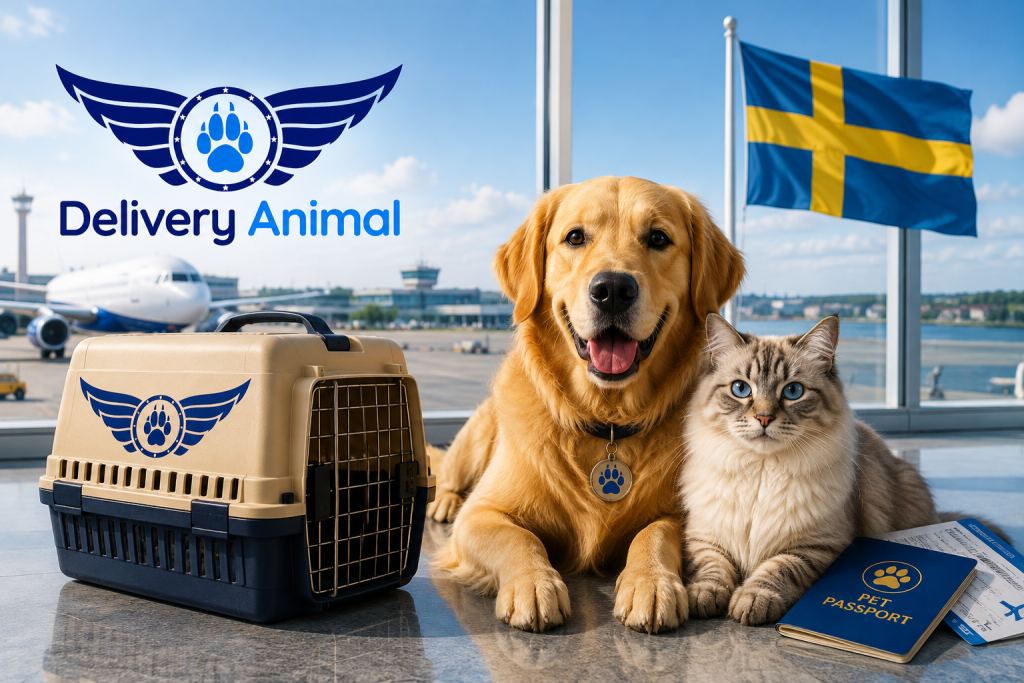

Moving from Ukraine to Europe with a dog or cat is a separate logistical task that should be planned well before the actual departure date. In 2026, international travel with pets requires a clear distinction between entry into the European Union from a non-EU country, movement within the EU, and commercial transportation.
Pet Transportation to Europe does not begin with buying an airline ticket. First, the destination country, the first EU entry point, the rabies status of the country of departure, the need for rabies antibody testing, and the type of veterinary certificate must be determined. Only then should the transportation route be finalized.
Since April 22, 2026, the non-commercial movement of dogs, cats and ferrets is governed by the updated EU animal-health framework, including Commission Delegated Regulation (EU) 2026/131. The European Commission publishes specific requirements for pets entering the EU from countries outside the Union.
Pet Transportation to Europe: Why Ukraine Is a Non-EU Country
For EU veterinary purposes, Ukraine is a country outside the European Union.
This means that the route:
Ukraine → Germany
is legally different from:
Germany → France.
In the first case, the animal is entering the EU from a non-EU country and must complete the applicable entry procedure. In the second case, the pet is already travelling within the European Union.
This makes the first EU entry point especially important.
For example:
Ukraine → Poland → Germany
means that the Polish entry point becomes part of the veterinary procedure.
Likewise:
Ukraine → Hungary → Austria
must be planned with Hungary considered as the first EU country of entry.
After the required entry checks have been successfully completed, the animal can continue travelling within the EU under the applicable documentation.
Pet Transportation to Europe: Microchip Before Rabies Vaccination
One of the key EU requirements is the correct sequence of identification and vaccination.
A dog, cat or ferret must be identified with an appropriate microchip. The rabies vaccination used to meet the EU entry requirements must not have been administered before the animal was identified.
The practical sequence is:
microchip → rabies vaccination → waiting period → required testing → documents → travel.
The microchip number should match the veterinary passport and the international certificate.
Before departure, it is worth having the microchip scanned and checking the number against every document.
Pet Transportation to Europe: Rabies Vaccination
For a primary rabies vaccination, the animal must be at least 12 weeks old.
After completion of the primary vaccination procedure, at least 21 days must pass before the vaccination becomes valid for travel under the applicable EU requirements.
Subsequent vaccinations should be administered within the validity period of the previous vaccination.
This is particularly important for puppies and kittens.
The travel date should be calculated by combining:
age + microchip + vaccination + waiting period + destination requirements.
A three-month-old puppy, for example, may still not be ready for international travel even if it is old enough to receive its first rabies vaccination.
Pet Transportation to Europe: Is a Rabies Antibody Titer Required?
This is one of the most important questions for Ukrainian pet owners.
A rabies antibody titration test is not required for every country of departure. The European Commission maintains an official list of countries and territories from which dogs, cats and ferrets may enter the EU without a rabies antibody titration test.
For countries outside the relevant list, additional procedures apply.
When titration is required:
- blood must be collected by an authorized veterinarian;
- at least 30 days must have passed after the primary rabies vaccination;
- testing must be performed by a designated laboratory;
- the antibody level must be at least 0.5 IU/ml;
- where the applicable 90-day waiting period applies, the blood sample must be taken at least 90 days before the required certification.
This is why preparing a pet from a country requiring titration can take several months.
Pet Transportation to Europe: A Successful Titer Does Not Always Need to Be Repeated
A successful antibody test does not necessarily need to be repeated before every trip.
If the animal continues receiving rabies booster vaccinations within the validity period of the previous vaccination, the previous successful titration can remain valid.
This is especially useful for owners who travel frequently or temporarily live outside the EU.
Old rabies titer results, veterinary passports and vaccination records should therefore be preserved carefully.
Pet Transportation to Europe: Animal Health Certificate
For entry from a non-EU country, the main international veterinary document is generally an Animal Health Certificate.
It should include:
- identification of the animal;
- rabies vaccination details;
- rabies antibody test results, where applicable;
- other relevant veterinary information;
- confirmation that the animal is fit for travel;
- the required owner declaration concerning non-commercial movement.
For the initial entry into the EU, the certificate is generally valid for 10 days from the date of issue by the official veterinarian until the documentary and identity checks at the EU entry point.
After successful entry, it can generally support further movement within the EU for the applicable period, subject to the validity of the rabies vaccination.
For this reason, the certificate should be coordinated closely with the actual departure date.
Pet Transportation to Europe: Where Does the First Veterinary Check Take Place?
Pets arriving from non-EU countries must enter through an officially designated Travellers’ Point of Entry.
At this point, authorities check:
- veterinary documents;
- microchip identification;
- compliance with the applicable entry conditions;
- whether the animal corresponds to the certificate.
The final destination and the first EU entry point are therefore not necessarily the same.
For example, a traveller living in Munich does not necessarily need to use Munich as the first EU entry point.
The route might instead be:
Ukraine → Warsaw → Munich
or:
Ukraine → Vienna → Munich.
The chosen first entry point must be appropriate for the applicable veterinary procedure.
Pet Transportation to Europe Through Poland
Poland is one of the most practical destinations for Ukrainian pet owners because of its geographical proximity and extensive road connections.
For large dogs, ground transportation can often be simpler than a multi-stage flight.
Possible routes include:
Lviv → Krakow → Germany
or:
Ukraine → Poland → Czechia → Austria.
However, if Poland is the first EU entry country, the required checks must be completed there.
Pet Transportation to Europe Through Germany
Germany is both a major destination for Ukrainians and an important European transportation hub.
Common routes include:
Ukraine → Germany
Ukraine → Poland → Germany
Türkiye → Germany → Austria
USA → Germany → other EU countries.
For complex itineraries, the first EU entry point must be established before transportation is booked.
Pet Transportation to Europe: Large Dogs and Small Cats Require Different Routes
The size of the animal can significantly affect the transportation method.
A small dog or cat may sometimes travel in the cabin if the airline permits it.
A large dog requires a different approach.
The planning may involve:
- transport crate dimensions;
- animal weight;
- combined weight of the crate and pet;
- airline restrictions;
- aircraft type;
- temperature limitations;
- cargo availability;
- ground transportation after EU entry.
Therefore, the best route for a Yorkshire Terrier does not necessarily make sense for a German Shepherd.
For large dogs, a combination of air travel to the first EU entry point followed by ground transportation can sometimes be more practical.
Pet Transportation to Europe: Brachycephalic Breeds
Pugs, French Bulldogs, English Bulldogs, Pekingese and other flat-faced breeds require special consideration.
It is important to distinguish between:
government entry requirements and airline restrictions.
Even when a country permits the animal to enter, an airline may restrict or prohibit transportation of certain brachycephalic breeds.
The airline should therefore confirm acceptance of the specific pet before tickets are purchased.
For some animals, ground transportation can be a better alternative.
Pet Transportation to Europe: How Many Pets Can Travel?
Under the standard non-commercial rules, up to five dogs, cats or ferrets may travel under the applicable conditions.
Exceptions can apply to animals travelling to:
- competitions;
- exhibitions;
- sporting events;
- training for such events.
Additional conditions apply, including age requirements and proof of participation.
If more than five animals are travelling and the exception does not apply, the movement may fall under different commercial rules.
Commercial transportation and animals that change ownership are subject to separate requirements.
Pet Transportation to Europe: When the Pet Travels Without the Owner
Another scenario is when the animal travels separately from its owner.
For example, the owner may already be living in Germany while the dog remains in Ukraine and is transported later.
In such cases, the standard private-travel procedure cannot automatically be used.
It is necessary to determine:
- the legal status of the movement;
- the required documents;
- cargo procedures;
- first EU entry requirements;
- whether border veterinary control is necessary;
- the transport company’s responsibilities.
If the animal is being sold, rehomed or transferred to a new owner, the movement may no longer qualify as ordinary non-commercial pet travel.
Pet Transportation to Europe: Is Echinococcus Treatment Required?
This requirement is often misunderstood.
Treatment against Echinococcus multilocularis is not required for every EU destination.
It is mandatory for dogs travelling directly to Finland, Ireland, Malta, Northern Ireland or Norway, and the treatment must be performed by a veterinarian between 24 and 120 hours before entry.
The requirement does not apply to cats or ferrets.
This is another example of why a single “European pet travel checklist” is not suitable for every country.
Ukraine → Germany and Ukraine → Finland are different veterinary routes.
Pet Transportation to Europe: Travel Within the EU After Entry
Once the animal has legally entered the EU and passed the required checks, further travel between EU countries becomes considerably simpler.
Depending on the situation, an EU pet passport or a valid Animal Health Certificate can support onward travel within the Union.
For example:
Ukraine → Poland → Germany → France
can be organized as one international relocation route provided that the initial EU entry procedure and documentation are fully compliant.
Pet Transportation to Europe: Austria, Sweden and Switzerland Are Not Identical
Even within the European region, the requirements are not identical.
Austria is an EU Member State and therefore follows the EU veterinary framework.
Sweden is also an EU Member State but has additional national procedures, including customs requirements.
Switzerland is outside the EU but maintains closely coordinated veterinary arrangements with the Union.
Pet Transportation to Europe: How Long Does Preparation Take?
There is no universal preparation period.
If the animal already has:
- a microchip;
- valid rabies vaccination;
- a continuous vaccination history;
- required laboratory tests;
the process may be relatively quick.
If the animal needs a primary rabies vaccination and antibody titration, preparation can take several months.
For countries requiring the applicable 90-day waiting period after blood sampling, the veterinary timeline must be calculated long before the planned departure date.
Therefore, the correct question is not:
“When do we want to fly?”
but:
“When will the animal be legally ready to travel?”
Pet Transportation to Europe: Five Documents to Check First
Before international transportation, create a simple checklist.
1. Identification
The microchip number must match all documents.
2. Rabies Vaccination
The vaccination must be valid and administered after identification.
3. Rabies Antibody Test
The test is required only where the applicable rules for the country of departure make it necessary.
4. Animal Health Certificate
The certificate must be issued according to the applicable EU procedure and within the required timeframe.
5. First EU Entry Documentation
The correct Travellers’ Point of Entry and veterinary inspection procedure must be established.
Additional documents may be required depending on the route and destination.
Pet Transportation to Europe With Delivery Animal
Delivery Animal organizes international transportation of dogs and cats from Ukraine to EU countries, Switzerland and other European destinations.
Depending on the route, we can coordinate:
- country-of-origin assessment;
- first EU entry point;
- veterinary preparation;
- microchip;
- rabies vaccination;
- antibody titration;
- Animal Health Certificate;
- air transportation;
- cargo;
- ground transportation;
- transit;
- travel crate;
- airport collection;
- delivery to the final address.
Expert Conclusion
Pet Transportation to Europe from Ukraine in 2026 should begin with determining the first EU entry point and the rabies-risk status of the country of departure: depending on the route, a pet may need a microchip, valid rabies vaccination, a rabies antibody titer of at least 0.5 IU/ml, an official Animal Health Certificate and documentary and identification checks at a designated entry point; the current requirements should always be verified through the European Commission’s official rules for bringing dogs, cats and ferrets into the EU from non-EU countries.
The most common mistake is treating Europe as one country. Entry requirements from a non-EU country, the first veterinary inspection, onward movement within the EU and national rules in individual countries should all be combined into one carefully planned route.
Delivery Animal coordinates the full international journey — from veterinary preparation in Ukraine to safe delivery of the dog or cat to its final destination in Europe.