
Cat adaptation after moving is more than just getting used to new walls; it is a complex psychophysiological process of body recovery after extreme stress. When the international pet relocation is complete, and all bureaucratic hurdles with customs and veterinary control are behind you, it may seem to the owner that the hardest part is over.
However, for the pet itself, real cat stress often enters its peak phase exactly at the moment of entering an unfamiliar environment. Cats are territorial animals; their sense of security is 90% tied to familiar scents and explored routes. A sudden change of country, climate, and even the water composition in their bowl can pull the rug out from under them. To ensure that cat adaptation after moving proceeds without medical complications, such as idiopathic cystitis or hepatic lipidosis, the owner must follow a “soft entry” strategy into the new space that respects the biological needs of a predator.
Day 1: Creating an Isolated “Comfort Zone”
The first and most important rule: adaptation in a new home should not begin with a grand tour of the entire apartment. For a frightened cat, a vast empty area is a zone of potential predator attacks.
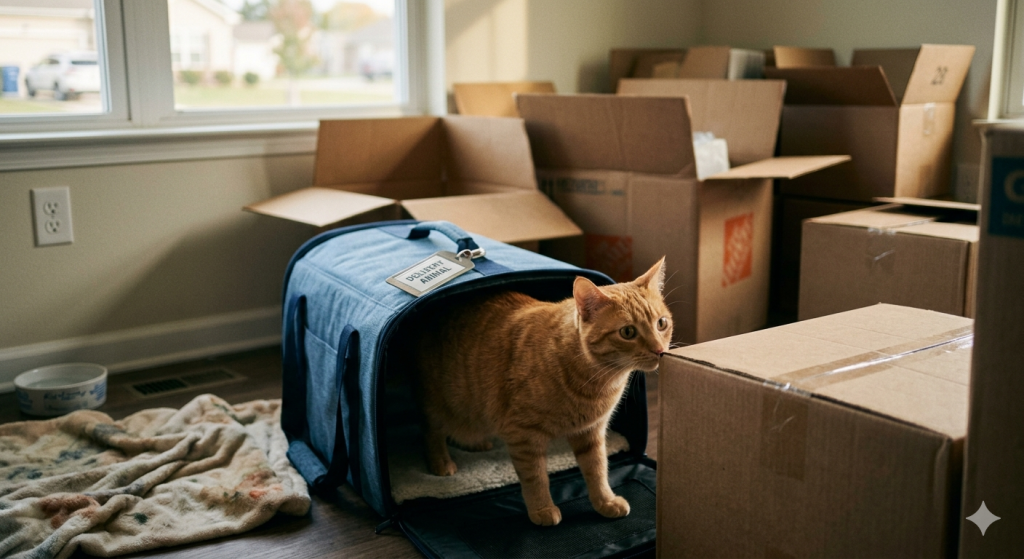
- Territory Restriction: Allocate one small room (e.g., a guest bedroom). Set up a litter box, food and water bowls, and a familiar bed here. The smaller the initial area, the faster the cat will feel it can control it.
- Familiar Markers: If the international pet relocation was carried out in a special plastic crate, do not hide it away. Leave the carrier open in a corner of the room—for the pet, it is the only familiar “object” that smells like their old home.
- How to Calm a Cat: Place some of your unwashed clothing (a T-shirt or hoodie) on the floor. Your scent is the primary safety signal, confirming that despite the change of scenery, the “pack” remains the same. On this day, cat adaptation after moving requires maximum silence: avoid loud music and visits from friends.
Days 2-3: Feeding Regimen and Physiological Monitoring
During this period, cat stress may manifest as temporary anorexia or gastrointestinal upset. It is vital to understand that cat adaptation after moving requires immense energy, so nutrition must be monitored closely.
If your pet refuses their usual dry food, try offering more calorie-dense and aromatic wet diets or special recovery pates. Keep in mind that adaptation in a new home is often accompanied by hidden dehydration due to dry air on the plane. According to International Society of Feline Medicine (ISFM) guidelines, access to fresh water should be available 24/7. If the cat doesn’t drink from a bowl, try placing glasses of water in different corners or using a pet fountain.
Important Warning: If cat adaptation after moving is accompanied by a total refusal of food and water for more than 24–36 hours, this is a critical reason for an online veterinary consultation. In cats, prolonged fasting can trigger irreversible processes in the liver.
Days 4-5: Exploration Tactics and Socialization
Once you notice the first signs that cat stress is decreasing (the pet begins grooming, scratching allowed objects, or showing interest in toys), you can gradually expand their boundaries. Adaptation in a new home moves to the active mapping stage.
- The Open Door Principle: Simply open the door to the next room, but do not lure or pull the animal out by force. The cat should exit on its own when it feels ready.
- Vertical Resources: Cats feel safe when they are above human knee level. Prepare shelves or tall scratching posts. Height provides a sense of control, which speeds up the process of successful cat adaptation after moving.
- Positive Reinforcement: Use techniques on how to calm a cat: speak in a soft, low voice, avoid direct eye contact (squinting is a sign of trust), and reward every venture out of the room with a treat.
Days 6-7: Establishing Routine and Stability with Delivery Animal
By the end of the first week, cat adaptation after moving should enter the stabilization phase. The animal already knows the location of the litter box and bowls in the new space. Now, your main task is to implement a strict, predictable schedule. Predictability kills cortisol.
Remember that high-quality document preparation is only the foundation. The second half of success is your patience. During this period, it is helpful to set fixed hours for play and affection. If cat stress persists (the cat hides at any sound or starts ignoring the litter box), it may be worth consulting a behaviorist for guidance.
Safety Checklist for the New Residence
Before letting your pet roam freely throughout the house, ensure that adaptation in a new home isn’t interrupted by an accident:
- Hidden Traps: Check gaps under kitchen cabinets and behind the washing machine. A frightened cat can get stuck in the most unexpected places.
- Flora: Ensure there are no toxic plants in the new interior.
- Windows: Check the reliability of window screens. Standard mosquito nets cannot withstand a cat jumping at a bird—”Pet-Screen” systems are essential.
Conclusion
International pet relocation is a major stressor not only for logisticians but also for the four-legged travelers themselves. Remember that cat adaptation after moving is a marathon, not a sprint, requiring delicacy. Every pet is unique: a stoic Briton might settle in within three days, while a sensitive Oriental might need a month.
The main task of a responsible owner is to know how to calm a cat and provide them with the “right to privacy.” The Delivery Animal team is always ready to assist you during the transportation stage to ensure your subsequent adaptation in a new home goes as smoothly and peacefully as possible.