
Planning a trip with a pet during the summer is a complex logistical task where the price of a mistake is far too high. Given the climate shifts of 2026, with annual record-breaking temperatures, transporting dogs in the heat requires more than just care—it demands a professional approach to safety. In this guide, we break down every nuance, from strict airline regulations to emergency heatstroke assistance.
1. Air Travel: Why Transit Temperature Matters More Than Departure
Many owners make the critical mistake of only checking the weather at their point of origin. However, transporting dogs in the heat by air is a multi-stage process. Major global carriers, including Lufthansa, Emirates, Qatar Airways, and Turkish Airlines, have implemented rigorous safety protocols.
Heat Stress Policy (Temperature Restrictions)
Most airlines now enforce a strict limit: if the temperature at any point along the route (departure, transit, or arrival) exceeds +29–30°C (84–86°F), the animal will be denied boarding. This rule applies even if you have a confirmed booking and have already arrived at the airport.
Why does this happen? Even if the cargo hold is climate-controlled, animals spend significant time in their crates on the tarmac during loading or taxiing. At +30°C in direct sunlight, asphalt can reach +60°C (140°F), turning a travel crate into a scorching trap.
2. Cabin or Cargo: Choosing the Safest Format
When planning to transport dogs in the heat, the location of the pet on the aircraft is the deciding safety factor.
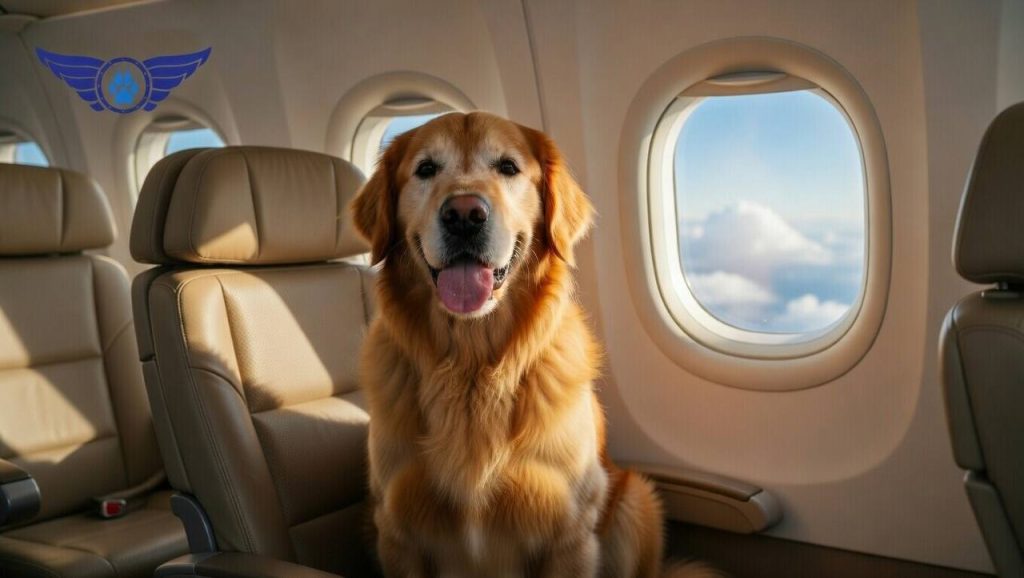
In-Cabin Travel (PETC)
The “gold standard” for safety.
- Pros: Stable temperature (approx. +22°C/72°F), visual monitoring by the owner, and the ability to provide water at any time.
- Cons: Strict weight limits (usually up to 8kg/17lbs including the soft carrier) and dimension restrictions.
Cargo or Manifest Cargo (AVIH/Cargo)
If your dog is larger than average, they will fly in a specialized compartment. In 2026, IATA (Live Animals Regulations) requirements have become even more stringent.
- Safe if: The route is chosen specifically for night flights when temperatures are lower.
- Dangerous if: There is a long daytime layover in a transit hub (e.g., Dubai or Doha).
3. Car Travel: The “Greenhouse” Trap
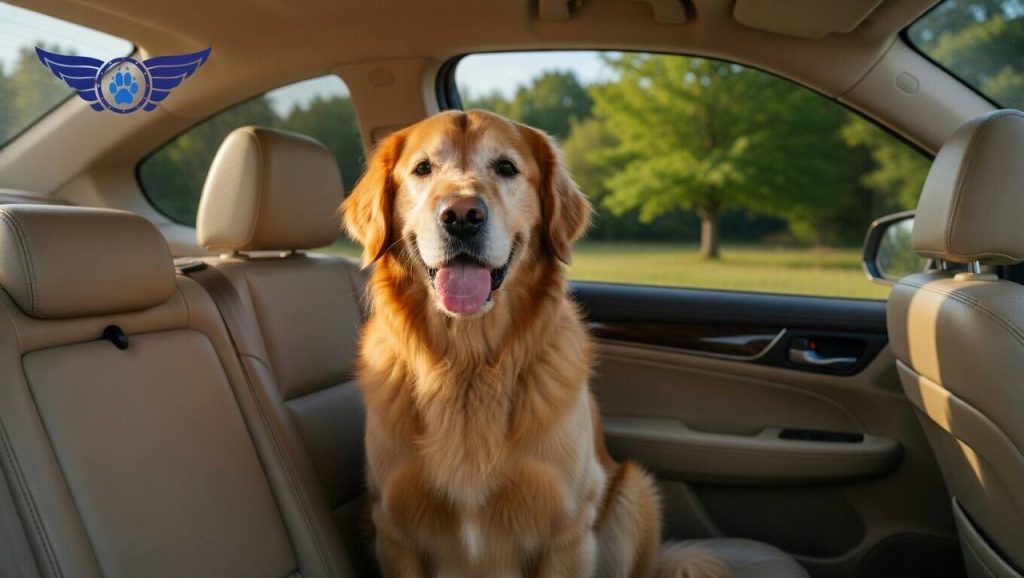
Transporting dogs in the heat by car is a major test for the animal’s cardiovascular system. A car’s interior can reach critical temperatures within minutes.
- Conditioning: Never rely solely on open windows. They do not provide sufficient cooling and can cause ear infections (otitis) due to heavy drafts.
- Reflective Technology: In 2026, it is recommended to use specialized foil car covers that reflect up to 90% of UV rays, along with protective window shades.
- Travel Schedule: Plan to depart at 3:00 or 4:00 AM to complete the bulk of the journey before the midday sun hits.
4. Preparing Your Dog for Flight and Road Trips
For successful dog transport in the heat, preparation should begin several weeks in advance.
- Crate Acclimatization: Stress raises core body temperature. If a dog panics inside a crate, the risk of heatstroke increases exponentially.
- Feeding Schedule: Do not feed your dog for 4–6 hours before departure. A full stomach can impede breathing, which is a dog’s primary method of thermoregulation.
- The “Freezer” Hack: Professionals use water bowls that are filled and frozen in advance. During the trip, the ice melts slowly, providing cool water and slightly lowering the air temperature inside the crate through evaporation.
- Absorbent Materials: Use high-quality pads with super-absorbent polymers. A damp mat combined with heat can create a “sauna effect,” leading to skin irritation and overheating.
5. Heatstroke: Symptoms and Emergency Response
Every owner transporting dogs in the heat must recognize the signs of overheating:
- Tongue turning dark red or bluish.
- Thick, ropy saliva.
- Glazed eyes or lack of response to commands.
- Vomiting or seizures (in severe cases).
Immediate Action Plan:
- Shade and Rest: Move the dog to a climate-controlled room or deep shade immediately.
- Gradual Cooling: Wet the armpits, paw pads, and inner thighs with cool (not ice-cold) water. Important: Do not drape a wet towel over the dog’s back, as this creates a heat-trapping vapor barrier.
- Hydration: Offer water, but never force-feed it.
- Veterinary Care: Seek urgent medical attention. Heatstroke effects, such as kidney failure or internal clotting issues, can manifest 24–48 hours after the event.
6. Professional Assistance 2026
If you are planning a complex dog relocation in the heat to countries like the USA, Canada, Israel, or the EU, it is best to consult experts. International pet logistics specialists account for dozens of factors: from the latest CDC entry rules to flight connections in airports with specialized animal climate terminals (like the Frankfurt Animal Lounge).
Professional support includes:
- Sourcing routes with minimal ground time.
- Verifying temperature limits across the entire flight network.
- Managing documentation (Veterinary certificates, Rabies Titer Tests).
Conclusion
Transporting dogs in the heat is a risk that can only be minimized through meticulous planning. Remember: your pet’s comfort is more important than saving money on a ticket.
DeliveryAnimal.com advocates for responsible animal treatment and supports the distribution of verified expert information.