

Why Planning Ahead is Crucial
Many dream of taking their beloved pet — a dog or cat — with them on their travels or during relocation. But international transportation is not as simple as just boarding a plane. Without proper preparation, you may encounter problems: refusal to board, quarantine, sending the animal back, high costs, and stress for your pet.
If you’re planning a trip to countries like the USA, Canada, UAE, Cyprus, Ireland, Israel, or relocating from Ukraine, Kazakhstan, other European countries, or nearby regions — it’s important to find out in advance the required steps, ensure everything is properly arranged, and prepare your pet.
By following a plan, you’ll ensure safety, comfort, and peace of mind for your pet. Below is a step-by-step guide with examples for different destinations.
Step 1. Does Your Pet Qualify: Microchip + Age + Vaccinations

✅ Microchip and Rabies Vaccination
The first mandatory step in international pet transport is the implantation of an ISO-standard microchip (usually 15 digits), and rabies vaccination, if the animal is over the required age.
Without a microchip or if it is unreadable, almost no country will accept the animal.
After the rabies vaccination, a required “waiting” period must pass — for example, in the European Union, at least 21 days.
📅 Pay Attention to Timing
The vaccine should be given after the microchip is implanted. Do not plan your trip immediately — wait for the necessary time before the vaccination becomes valid. Make sure the vaccine is still valid before your trip — valid documents are required.
Step 2. Gather Complete Documentation
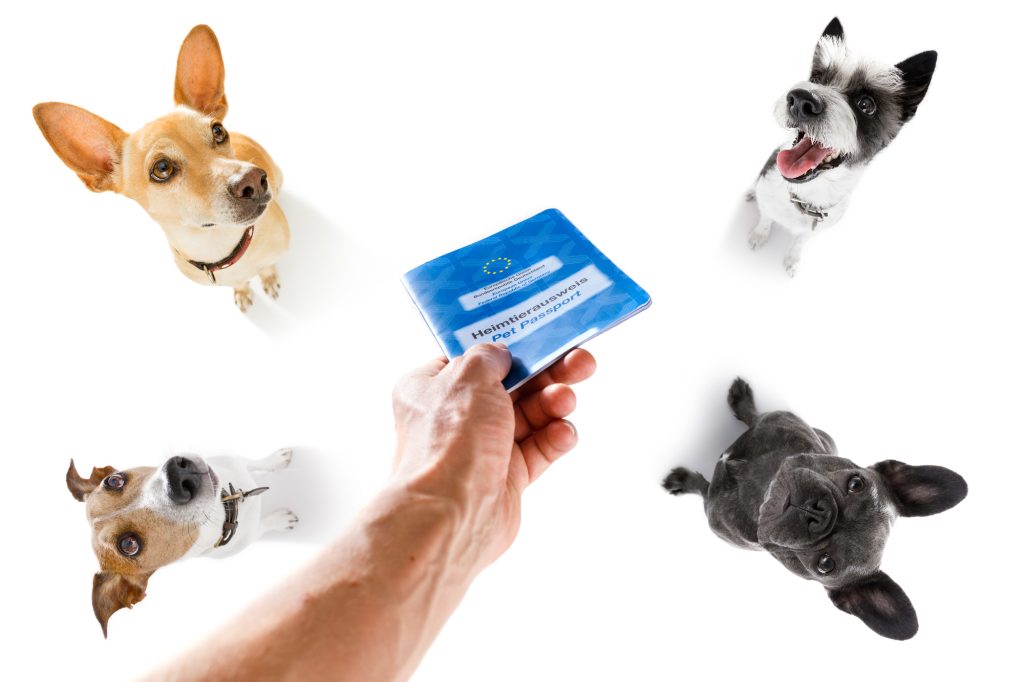
For international transport, you will almost always need:
- International veterinary passport or International health certificate (depending on the country).
- Vaccination certificates (especially against rabies), with dates, serial numbers, and the veterinarian’s signature.
- Chip documentation — the microchip number must match the passport and certificate.
- In some cases — test results: for example, a titer test (when entering from rabies-endemic countries), anti-helminthic treatment for dogs.
⚠️ Note: For countries like Cyprus, a blood test (titer test) may be required if coming from a “non-controlled” country.
Step 3. Choosing the Transport Method: Plane, Car, Train — and Requirements for Each

✈️ Plane — The Most Common Option
For most countries (USA, Canada, UAE, Cyprus, Israel, EU countries, etc.), animals are most often transported by air. The key requirements are:
- Pet carrier/container — hard, with ventilation, meeting airline standards.
- Documents at hand — passport, veterinary certificates, chip.
- Valid vaccination certificates — must be current and not expired.
- Compliance with veterinary regulations of the destination country — all vaccinations, sometimes a titer test, anti-helminthic treatment.
🚗 Car/Train/Combo
If traveling overland (for example, through several European countries), it’s important to:
- Follow the border-crossing rules — each country, especially in the EU, has its requirements for microchips and vaccinations.
- Allow extra time for customs, potential inspections, and document processing.
- Be ready to show all documents and ensure the pet’s comfort: transportation, rest, food, and water.
Step 4. Check the Requirements of Your Destination Country
Each country has its own specific rules. Here are some general requirements for popular destinations to help you get started:
🇦🇪 UAE
Required: microchip, rabies vaccination, additional vaccinations; Pet must not be too young; Import permit required.
🇨🇾 Cyprus
ISO microchip, rabies vaccination, 21-day waiting period after vaccination; Blood test (titer test) may be required if coming from a “non-controlled” country.
🇪🇺 EU Countries / Ireland (and EU countries)
Microchip + valid vaccination, considering expiration dates; If entering from non-EU countries, a health certificate may be required.
🇺🇸 USA / 🇨🇦 Canada
Rules change, but typically: microchip + vaccination + corresponding certificate for entry from low-risk countries; Always check the latest requirements with airlines and customs services.
Step 5. Prepare Your Pet: Health, Comfort, and Psychology
- Visit the vet before the trip: vaccinations, chip, passport.
- Ensure the carrier/container meets standards (size, ventilation, reliability).
- For long flights: Do not feed your pet for ~6–8 hours before departure; give water, calm them, and pack familiar items (blanket, toy).
- When crossing borders — keep copies of all documents and contact details for veterinary services in the destination country.
What Happens if You Don’t Prepare
- You may be denied boarding if the microchip is unreadable or documents are not valid.
- Possible refusal of entry, quarantine, or return of the animal.
- The pet may become stressed and anxious, turning the trip from an exciting adventure into a problem.
✅ Your Action Plan — Right Now
- Check if your pet has an ISO microchip.
- Visit the vet to get vaccinations, a passport/certificate.
- Find out the exact requirements for the country you’re traveling to — microchip, vaccinations, documents.
- Purchase the correct carrier and prepare everything your pet needs.
Don’t delay — start preparing 2-3 months before your trip to make sure everything is done on time.
Conclusion: Travel with Your Pet Smartly and Enjoyably
International pet transportation is possible with proper preparation. Your responsibility + the correct documents + ensuring the pet’s comfort = a smooth relocation and healthy pet.
Don’t wait — start your preparations today so that everything is ready on the day of your trip: passport, chip, carrier, health. Then your journey will be safe, and your pet will be calm.
Let your joint trip be pleasant and memorable!