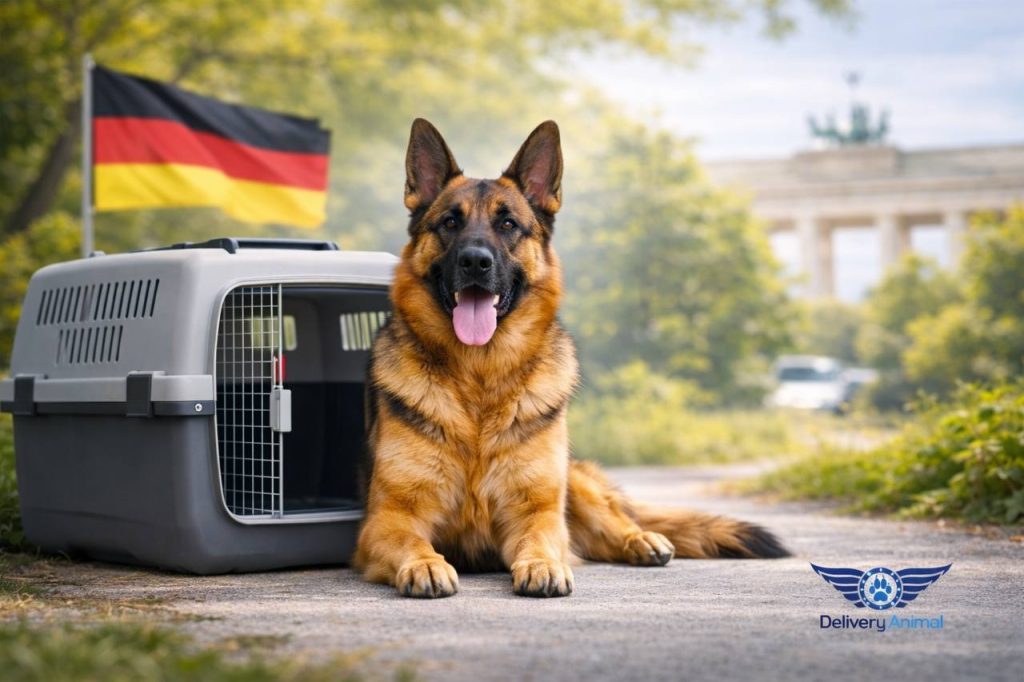

Importing dogs to Germany is regulated by European Union legislation on the movement of pets. Germany applies unified EU veterinary rules designed to prevent the spread of dangerous diseases, primarily rabies.
To successfully arrange the import of dogs to Germany in 2026, pet owners must prepare the animal and the required documents in advance. The main requirements include microchipping the dog, ensuring a valid rabies vaccination, preparing veterinary documentation, and following proper transport regulations.
Main Rules for Importing Dogs to Germany in 2026
The import of dogs to Germany is governed by EU-wide regulations for the movement of companion animals, established in Regulation (EU) No. 576/2013.
Before planning the import of dogs to Germany, the owner must ensure that the animal meets the key veterinary requirements of the European Union.
The mandatory requirements include:
- identification of the animal with an ISO-standard microchip
- a valid rabies vaccination
- international veterinary documents
- an EU veterinary certificate
- a rabies antibody test (for certain countries)
These requirements apply to non-commercial movement of pets, meaning the transport of no more than five animals accompanied by their owner.
If more than five animals are being transported, the import of dogs to Germany is considered commercial and is regulated by separate EU veterinary regulations.
Documents Required for Importing Dogs to Germany
To legally import dogs to Germany, several mandatory documents confirming the animal’s identity, health status, and vaccination history must be prepared.
Microchip Requirement for Importing Dogs to Germany
One of the most important requirements for importing dogs to Germany is the identification of the animal using a microchip that complies with ISO standards 11784/11785.
The microchip contains a unique 15-digit identification number used to verify the animal’s identity when crossing the EU border.
Important conditions include:
- the microchip must be implanted before the rabies vaccination
- the microchip number must match all veterinary documents
- any discrepancy may lead to refusal of entry
Without proper identification, the import of dogs to Germany is not permitted.
Veterinary Passport for Importing Dogs to Germany
When traveling within the European Union, animals use the EU Pet Passport.
The veterinary passport for importing dogs to Germany includes:
- the microchip number
- the owner’s information
- vaccination records
- official veterinary entries
This document confirms that the animal meets the veterinary requirements of the European Union.
If the dog is entering the EU for the first time from a non-EU country, a different document is required instead of the passport — the Animal Health Certificate.
EU Animal Health Certificate for Importing Dogs to Germany
When importing dogs to Germany from non-EU countries (such as Ukraine, the United States, or the United Kingdom), an EU Animal Health Certificate is required.
This certificate confirms:
- identification of the animal
- rabies vaccination status
- the overall health condition of the dog
The certificate must be issued by an official government veterinarian no later than 10 days before entering the European Union.
After crossing the border, the import of dogs to Germany is considered completed, and the document allows travel within the EU for approximately four months.
Vaccination Requirements for Importing Dogs to Germany
One of the key conditions for importing dogs to Germany is vaccination against rabies.
Rabies Vaccination for Importing Dogs to Germany
Rabies is the primary disease controlled by EU veterinary authorities during border inspections.
The vaccination rules for importing dogs to Germany are as follows:
- the minimum age for vaccination is 12 weeks
- at least 21 days must pass after vaccination
- the vaccine must be approved for use within the European Union
Only after these conditions are met is the vaccination considered valid for entry into the EU.
Rabies Antibody Test for Importing Dogs to Germany
For some countries, importing dogs to Germany requires a rabies antibody titration test.
The main requirements are:
- the test must be performed at least 30 days after vaccination
- the laboratory must be EU-approved
- the antibody level must be at least 0.5 IU/ml
- a waiting period of three months is required after the test before entry
This measure confirms that the rabies vaccination has produced sufficient immunity.
Minimum Age for Importing Dogs to Germany
According to EU veterinary regulations, importing dogs to Germany is only possible once the animal reaches a certain age.
The minimum age is 15 weeks.
This is because rabies vaccination can only be administered from the age of 12 weeks, and an additional 21-day waiting period is required after vaccination.
Therefore, puppies younger than this age cannot legally enter the European Union.
Restricted and Prohibited Dog Breeds in Germany
When planning the import of dogs to Germany, it is important to consider legislation regarding potentially dangerous dog breeds.
The following breeds are prohibited for import:
- Pit Bull Terrier
- American Staffordshire Terrier
- Staffordshire Bull Terrier
- Bull Terrier
In some cases, restrictions also apply to mixed breeds of these dogs.
Additionally, individual German federal states may impose their own regulations and additional restrictions.
Transport Requirements for Importing Dogs to Germany
Number of Animals Allowed for Importing Dogs to Germany
Non-commercial import of dogs to Germany allows the transport of up to five pets accompanied by their owner.
If more animals are transported:
- a commercial veterinary certificate is required
- the transport is regulated under commercial animal movement rules.
Air Transport When Importing Dogs to Germany
Most airlines follow the International Air Transport Association (IATA) regulations for animal transport.
Key requirements include:
- small dogs (usually up to 8 kg) may travel in the aircraft cabin
- larger dogs are transported in the cargo hold
- a certified transport crate is mandatory
The crate must provide proper ventilation, secure locking mechanisms, and absorbent bedding.
Car Transport When Importing Dogs to Germany
When traveling by car, it is recommended to:
- make stops every 2–3 hours
- ensure the dog has access to water
- use a carrier or special pet seat belts for safety.
Common Mistakes When Importing Dogs to Germany
When preparing for the import of dogs to Germany, owners often make several common mistakes:
- rabies vaccination performed before microchipping
- missing rabies antibody test when required
- incorrectly issued veterinary certificate
- documents prepared too early
In such situations, the import of dogs to Germany may be refused.
Authorities may:
- place the animal in quarantine
- return the dog to the country of origin
- deny entry to the European Union.
Expert Conclusions on Importing Dogs to Germany
Analysis of official European Commission regulations shows that importing dogs to Germany is strictly regulated by EU veterinary legislation.
The key requirements include:
- identification of the animal with a microchip
- valid rabies vaccination
- official veterinary documentation
- compliance with preparation timelines
Experience shows that owners who begin preparing the documents three to four months in advance usually pass veterinary inspections without any problems.
Therefore, successful importing of dogs to Germany depends on proper document preparation, compliance with EU veterinary requirements, and well-organized transportation.
Official Sources
European Commission — Pet Travel Rules
German Federal Ministry of Food and Agriculture
DeliveryAnimal.com supports responsible treatment of animals and promotes the dissemination of verified expert information.