
Contents
- Why long flights require special preparation
- Planning the route in advance
- Choosing the right carrier
- Crate training
- Preparing the feeding routine
- Getting used to travel
- Health check before the flight
- Preparing documents in advance
- Preparing the owner for the trip
- Day of departure: what to consider
- Questions and answers
- Conclusion
Why long flights require special preparation
Long flights put additional strain on a pet’s body. Key factors include:
- long time inside the carrier
- noise and movement
- change of daily routine
- long waiting time at the airport
Proper preparation helps reduce stress and ensure a safe journey.
Planning the route in advance
The route should be chosen based on flight duration and number of layovers.
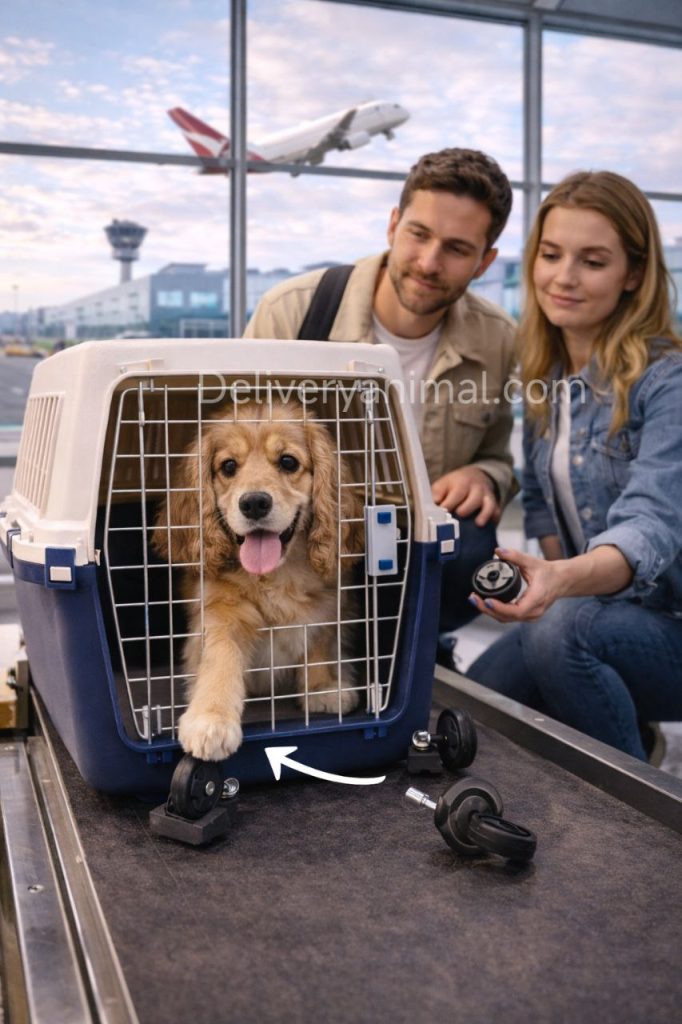
Choosing the right carrier
The carrier must meet international airline requirements.
Crate training
The pet should become familiar with the carrier well before the trip.
Preparing the feeding routine
Maintain the pet’s usual feeding schedule before the flight.
Getting used to travel
Short trips help pets adapt to movement and transportation.
Health check before the flight
A veterinary check-up is required before travel.
Preparing documents in advance
All documents must be ready before the departure date.
Preparing the owner for the trip
The owner’s calmness directly affects the pet’s condition.
Day of departure: what to consider
Arriving early at the airport helps avoid stress and rushing.
Questions and Answers
Can stress be completely avoided?
No, but it can be reduced.
When should preparation start?
As early as possible.
Should food be changed?
No, sudden changes are not recommended.
What is most important?
Gradual preparation.
Can owners prepare on their own?
Yes, but requirements must be followed.
Conclusion
Preparing a pet for a flight longer than 10 hours requires planning and gradual preparation.
If you are planning pet transportation, you can get a free consultation and document check from DeliveryAnimal specialists.