

Heartworm in dogs (dirofilaria) is an extremely dangerous parasitic disease that, without systemic control, inevitably leads to a fatal outcome. In 2026, this ailment is being recorded by veterinarians significantly more often due to global climate changes and the active migration of carrier insects. The primary issue is that in the early stages, the parasite practically does not reveal its presence; therefore, the disease is often diagnosed only at a critical stage. Timely prevention is the only scientifically proven way to guarantee that your pet’s life is out of danger.
How is Heartworm in Dogs Transmitted?
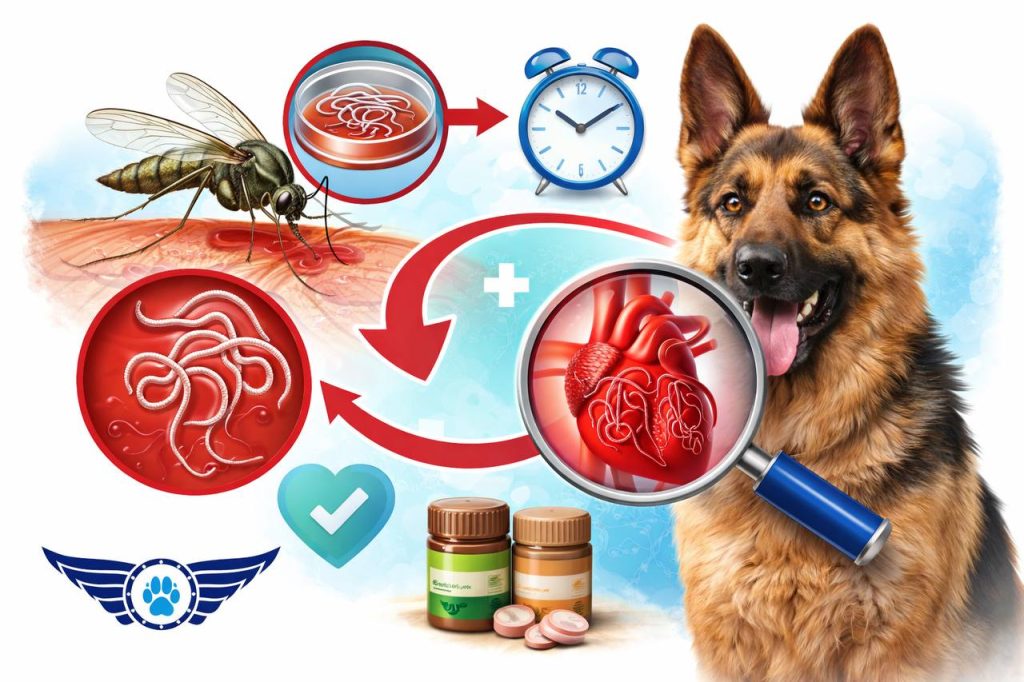
The primary and only vector for transmitting the disease is the common mosquito. When an insect bites an infected animal, it ingests microfilariae (first-stage larvae). Inside the mosquito’s body, the larvae mature to an infectious state, after which heartworm in dogs is transmitted to a healthy individual during the next bite. Without an intermediate host (the mosquito), transmission from one dog to another is impossible.
The Life Cycle of Heartworm in Dogs
Once in the body, the parasite begins a long migration through subcutaneous tissues and muscle fibers, which lasts up to seven months. Eventually, heartworm in dogs settles in the pulmonary arteries and the right side of the heart. Adult specimens can reach 30 cm in length, causing serious pathologies, mechanical obstruction of blood flow, and inflammation of the vessel walls.
Symptoms Owners Should Watch For
The treachery of the disease lies in its hidden course. Often, symptoms appear only when changes in the cardiovascular system have become practically irreversible.
Main stages of the disease:
- Hidden (Latent): External signs are completely absent; the dog leads an active lifestyle.
- Mild: Characterized by unusual fatigue and a rare dry cough after physical exertion or play.
- Moderate: Noticeable weight loss, shortness of breath even at rest, and anemia.
- Severe: Congestive heart failure develops, along with ascites (accumulation of fluid in the abdominal cavity) and critical exhaustion.
Effective Prevention: How to Defeat Heartworm in Dogs
Veterinary experts from the American Heartworm Society (AHS) state: prevention is the gold standard, without which reliable pet protection is impossible.
Why Year-Round Protection Against Parasites is Essential
Even in the winter period, heartworm in dogs remains a potential threat. Research confirms that mosquitoes are capable of surviving and remaining active in the warm basements of apartment buildings and city utilities. To minimize risks, protective medications should be used year-round, as abnormal thaws can trigger carrier activity at any time of the year.
Popular Protection Methods:
- Chewable Tablets: Contain macrocyclic lactones that destroy larvae in the blood before heartworm in dogs can mature into adults.
- Topical Drops (Spot-on): A convenient method that often combines protection against ticks, fleas, and heartworms.
- Injections: Long-acting protection that lasts for 6 or 12 months, eliminating the risk of missing a monthly treatment due to owner forgetfulness.
Diagnosis Before Treatment: Detecting Heartworm in Dogs
Before starting any preventive medication, it is mandatory to ensure that heartworm in dogs has not already established itself in the body in its adult form.
Blood Analysis and Annual Testing
Once a year, every pet should undergo an antigen test. This allows the veterinarian to confirm the absence of sexually mature female parasites. If preventive medicine is started while adult heartworm in dogs is already present in the heart, the mass death of microfilariae in the bloodstream can cause a severe immune response, anaphylactic shock, or pulmonary embolism.
Detailed Conclusions Based on Official Data
After analyzing modern veterinary protocols and statistical data from recent years, several fundamental conclusions regarding pet safety can be drawn:
- Prevention is more cost-effective than treatment. The cost of a treatment course for dirofilaria in 2026 exceeds the cost of ten years of prevention. Treatment requires the use of toxic arsenic-based drugs and many months of strict exercise restriction, which negatively impacts the dog’s mental and physical state.
- The geography of risk has expanded. Heartworm in dogs is no longer a problem exclusive to southern regions. Urbanization and climate change have created conditions for the parasite to spread everywhere.
- Safety of medications. Modern preventive agents have a high safety profile and are well-tolerated by most breeds when dosages are followed. The only exceptions are dogs with the MDR1 gene mutation (Collies, Shelties), for whom drug selection must be carried out under strict medical supervision.
- Owner Responsibility. Timely diagnosis and regularity of treatments are the only guarantees of a long and high-quality life for your pet. Remember, the disease is much easier to prevent at the larval stage than trying to save the animal’s heart once it is already infested with adult parasites.
Official Sources for Further Study:
- American Heartworm Society (AHS) — The gold standard for heartworm protocols.
- European Scientific Counsel Companion Animal Parasites (ESCCAP) — Recommendations for parasite control in Europe.
- FDA (U.S. Food and Drug Administration) — Information on veterinary drug safety.
Remember: preventing heartworm is easy, treating it is difficult, and restoring a pet’s lost health is sometimes impossible.
If you are planning a move or traveling with your pet, specialists at Delivery Animal can help organize safe international pet transportation — find more details on our website.