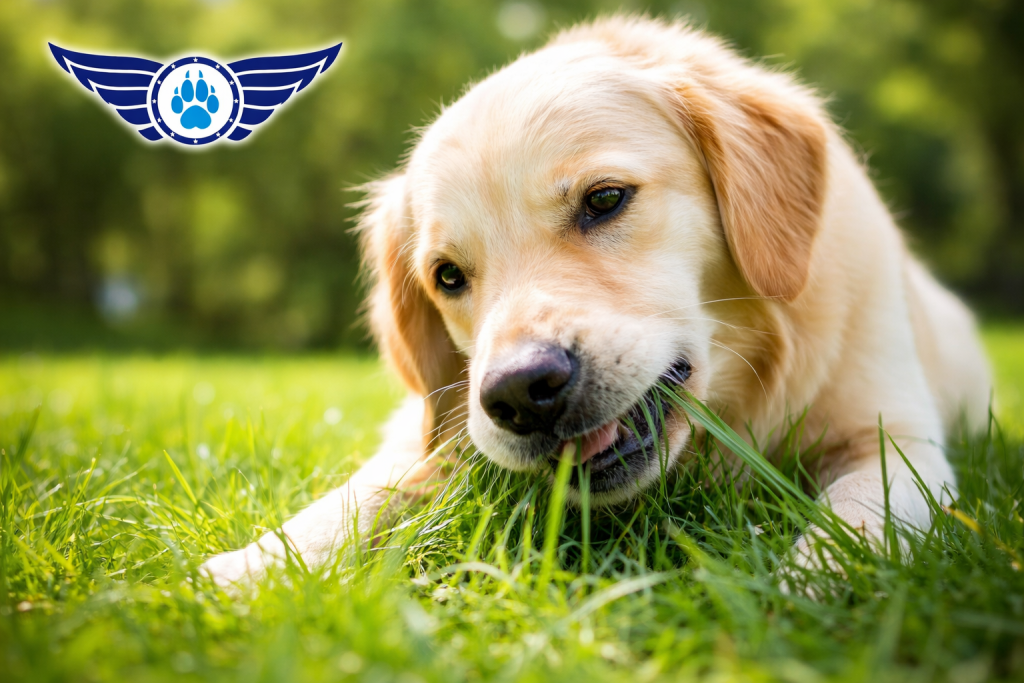

Every dog owner has witnessed it at least once: during a walk, their pet suddenly loses interest in games and begins to “graze” on greenery. Understanding why a dog eats grass is a common challenge for pet parents and veterinarians alike. Is it a sign of illness, a nutritional deficiency, or simply a strange habit? At Delivery Animal, we care about pet well-being, which is why we prepared this comprehensive guide.
Evolutionary Heritage: Instinct or Diet?
First, it is vital to understand that eating greens is common not only in domestic pets but also in their wild ancestors, like wolves. Studies show that wild canines frequently consume vegetation. But why a dog eats grass when they are primary carnivores remains a fascinating topic.
1. Gastrointestinal Cleansing
The most popular theory explaining why a dog eats grass suggests that animals use it as a natural emetic. Tough fibers irritate the stomach lining, provoking a gag reflex. This helps them rid themselves of excess bile or undigested food. According to VCA Animal Hospitals, cleansing is just one reason, as vomiting does not always occur after consumption.
2. Fighting Intestinal Parasites
Ethologists, when analyzing why a dog eats grass, suggest this is an ancient mechanism for fighting helminths (worms). The rigid stalks “sweep out” parasites as they pass through the digestive tract. Even if your pet is regularly dewormed, the instinct that triggers why a dog eats grass remains at a genetic level.
3. Filling a Fiber Deficiency
Sometimes the answer to why a dog eats grass lies in their daily diet. If the food lacks sufficient roughage, the animal looks for it in the environment. Fiber is essential for healthy digestion, making it a valid reason to investigate why a dog eats grass in specific cases.
Psychological Aspect: Boredom and Preferences
Behavioral factors play a significant role as well. When exploring why a dog eats grass, behaviorists often highlight boredom and taste. Many pets simply enjoy the flavor of fresh spring grass. However, if it becomes compulsive, you should consider why a dog eats grass so intensely—it might be a lack of mental stimulation. Experts at the American Kennel Club (AKC) recommend increasing physical activity in these situations.
Safety and Risks: When Should You Worry?
While the behavior itself is natural, it is important to know the risks. At Delivery Animal, we warn that it is not just about knowing why a dog eats grass, but where they do it.
- Chemicals: Lawns are often treated with herbicides.
- Infections: Grass can be contaminated with parvovirus or parasites. According to PetMD, the risk of infection in public parks is notably high.
- Toxic Plants: A dog might accidentally consume yew or lilies.
Delivery Animal’s Perspective
As logistics experts, we know that pet behavior can shift during travel. If your dog eats grass more often than usual, follow these steps:
- Check the diet: You may need food with higher fiber content.
- Run tests: To truly understand why a dog eats grass, rule out any nutritional deficiencies through blood work.
- Safe zones: Only allow “grazing” in areas you trust to be clean.
Specifics During Transportation
During trips with Delivery Animal, we closely monitor each pet. We minimize stress to ensure that a dog eats grassdue to habit rather than anxiety-driven behavior during the journey.
Conclusion
In most cases, the answer to why a dog eats grass is quite harmless. It is a natural process rooted in history. However, an owner’s attentiveness is the best guarantee of health. Now that you understand why a dog eats grass, it will be easier to ensure your pet’s comfort and safety.
Is your pet moving soon? We provide professional care and safety at every stage of their relocation!