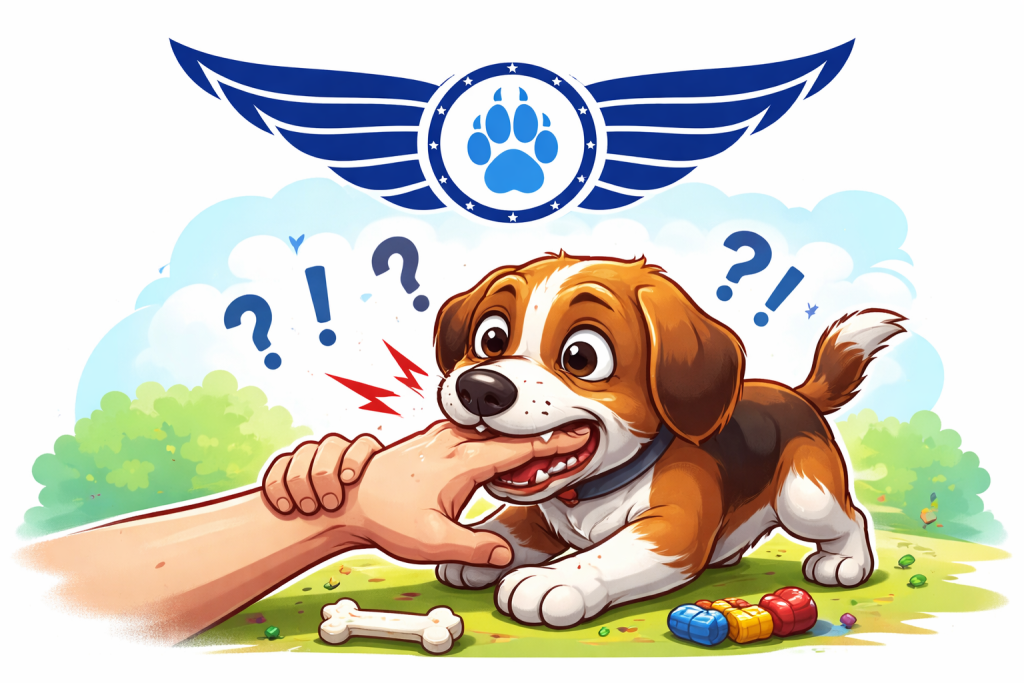

Every owner dreams of a harmonious relationship with their pet, yet sometimes they encounter frightening behavior. Understanding why a dog bites is fundamental to grasp animal psychology. At Delivery Animal, we work with thousands of animals annually, and our experience shows that every snap or bite has a specific cause that can and should be addressed.
In this article, we will analyze the main triggers of aggression, relying on international protocols and the expertise of the world’s leading ethologists.
Understanding the Signals: Why a Dog Bites “Suddenly”
In reality, dogs rarely attack without warning. Most incidents occur because a human has ignored the so-called “ladder of aggression.” Before using their teeth, an animal sends “calming signals”: licking their nose, turning their head away, or yawning due to stress. If these signs are not recognized, the dog moves to growling and, ultimately, a bite.
According to data from the American Veterinary Medical Association (AVMA), understanding body language is a key factor in preventing injuries.
1. Fear and Defensive Reaction
This is the most common reason. If an animal is cornered or feels a threat to its life, the survival instinct kicks in.
- Characteristics: This type of bite is usually quick and snapping. The dog tries to “drive away” the threat and immediately retreats.
- Transport Context: An unfamiliar environment can cause panic. This is why we recommend studying IATA recommendations for selecting the correct crate, which serves as a safe “den” for the dog during the journey.
2. Pain Syndrome and Physical Discomfort
Often, the answer to why a dog bites lies in the veterinary field. Hidden injuries, ear infections, joint dysplasia, or dental problems make an animal irritable. When we accidentally touch a painful area, the dog reacts reflexively. Experts from VCA Animal Hospitals emphasize that any sudden aggression in an otherwise calm dog is a reason for an immediate medical check-up.
3. Resource and Territorial Aggression
A dog may guard what it considers its own: a food bowl, a toy, or even its owner. This behavior is deeply rooted in genetics. Territorial protection is also a significant factor. To minimize risks, it is important to train the pet with the “Give” command using positive reinforcement rather than force.
Psychological Comfort During Transportation
At Delivery Animal, we pay special attention to the psychological state of animals. Relocation is a powerful stress factor that can provoke aggression even in the gentlest dog. We understand why a dog bites under stress: it is an attempt to control a situation that seems dangerous to them.
To ensure safety, we utilize:
- Certified crates that limit excessive visual stimuli.
- Special loading protocols that minimize direct contact with strangers.
- Consultations on preparing the animal for the trip 2–4 weeks before departure.
Classification of Aggression Types and Correction Methods
To work effectively with the problem, it is necessary to accurately identify the type of undesirable behavior.
| Type of Aggression | Main Trigger | Professional Solution |
| Play Aggression | Overexcitation during play | Immediate cessation of play if teeth contact skin. |
| Maternal | Protection of offspring | Providing peace and limiting access for strangers to the puppies. |
| Redirected | Inability to reach the target of irritation | Redirecting the dog’s attention to a treat or a toy. |
| Predatory | Moving objects (runners, bicycles) | Impulse control training and working with a behaviorist. |
Експортувати в Таблиці
Detailed instructions on recognizing body language can be found through the Association of Professional Dog Trainers (APDT).
How to Prevent Bites: Advice for Owners
If you find that your pet is showing their teeth, follow this algorithm:
- Do not punish for growling. A growl is a form of communication. If you punish a dog for growling, the next time they will bite silently, without warning.
- Respect personal space. Do not allow children or strangers to hug a dog if they show signs of tension.
- Consult a specialist. If you do not understand why a dog bites, invite an experienced animal behaviorist. Working with a professional will help identify the root of the problem before a serious incident occurs.
- Socialization and habituation. This is especially important for brachycephalic breeds and dogs with sensitive nervous systems. Gradual introduction to the world makes them more confident.
Conclusion
Aggression is a complex topic that requires patience and an expert approach. By understanding why a dog bites, you take the first step toward creating a safe and happy environment for your pet. At Delivery Animal, we are always ready to support owners, providing not only transport services but also expert knowledge in animal welfare. Remember: responsible ownership begins with understanding your four-legged friend’s needs.
Planning an international dog transport and worried about their behavior during the trip? Contact us for a consultation on safe pet travel preparation!