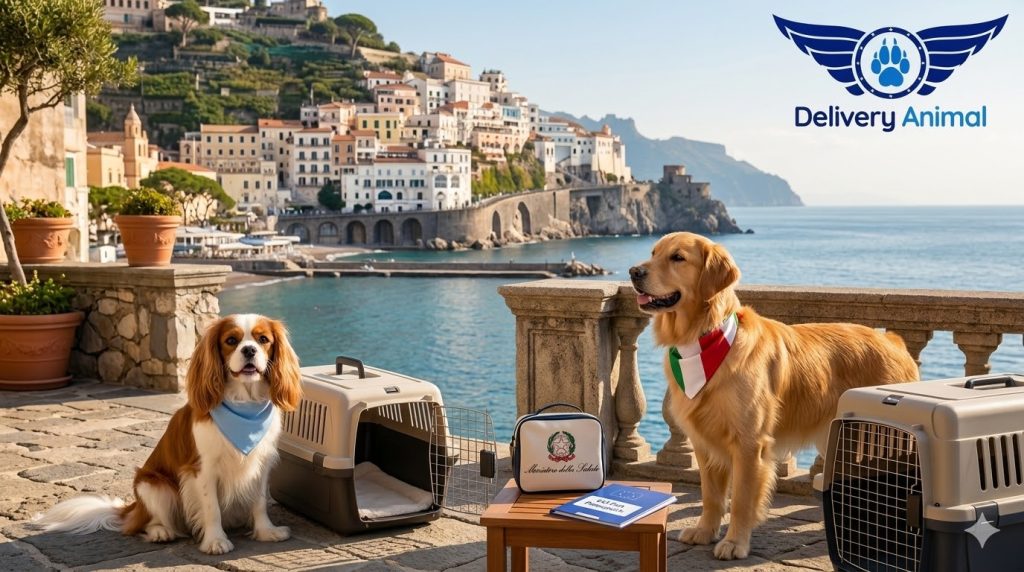

Relocating or traveling to the Italian Republic with a pet in 2026 requires more than just love for your animal; it demands strict adherence to bureaucratic procedures. Importing dogs to Italy is governed by both European Union legislation (EU Regulation No. 576/2013) and specific directives from the Italian Ministry of Health (Ministero della Salute).
In this guide, we break down the step-by-step algorithm to help you avoid pet quarantine and fines at the border.
1. Animal Identification: Microchipping Standards for 2026
The first and most critical stage, without which importing dogs to Italy is impossible, is microchipping.
- Technical Standard: The chip must comply with ISO standards 11784 or 11785. If your device is of an older model, you are required to provide the customs officer with your own scanner to read the code.
- Chronology: According to the rules, the microchip must be implanted before the rabies vaccination is administered. If your dog was vaccinated prior to the chip installation, that vaccination is not officially recognized by EU veterinary services, and the procedure must be repeated.
2. Rabies Vaccination and Waiting Periods
To legally import dogs to Italy, the animal must have a valid rabies vaccination performed with a certified product.
- Age Limit: Vaccination is permitted for puppies that have reached at least 12 weeks of age.
- Activation Period: After the primary vaccination, a minimum of 21 days must pass before the dog can cross the border.
- Revaccination: If you maintain an annual revaccination schedule (boosters), the 21-day waiting period does not apply, as immunity is considered continuous.
3. Rabies Antibody Titration Test
This is the “stumbling block” for many travelers. The necessity of this test depends on the country from which you are importing dogs to Italy.
- “Green List” Countries (Low Risk): USA, Canada, EU countries, UK, Japan. No test required.
- “Red List” Countries (High Risk): This includes many CIS countries (with some exceptions), Turkey, Serbia, and Southeast Asian countries.
Rules for Antibody Testing in 2026:
- Blood sampling must be performed no earlier than 30 days after vaccination.
- The antibody level must be at least 0.5 IU/ml.
- The 3-Month Rule: After receiving the test result, the dog must remain in the country of departure for an additional 90 days. Thus, you must plan to import dogs to Italy from high-risk countries at least 4 months in advance.
4. EU Animal Health Certificate
To cross the border from non-EU countries, you will need an official document confirming the pet’s health status.
- Issuance: The certificate is completed by an official government veterinarian in the exporting country.
- Language: The document must be drafted in both Italian and English.
- Validity: The certificate is valid for 10 days from the date of issuance until the moment of passing border control in Italy. Once in the EU, the document remains valid for 4 months for movement within the Schengen Area.
5. Transport Features and New 2026 Norms
In 2026, air carriers such as ITA Airways and Lufthansa updated their pet transport rules, making them more flexible but requiring increased attention to detail.
Dogs in the Cabin (PETC)
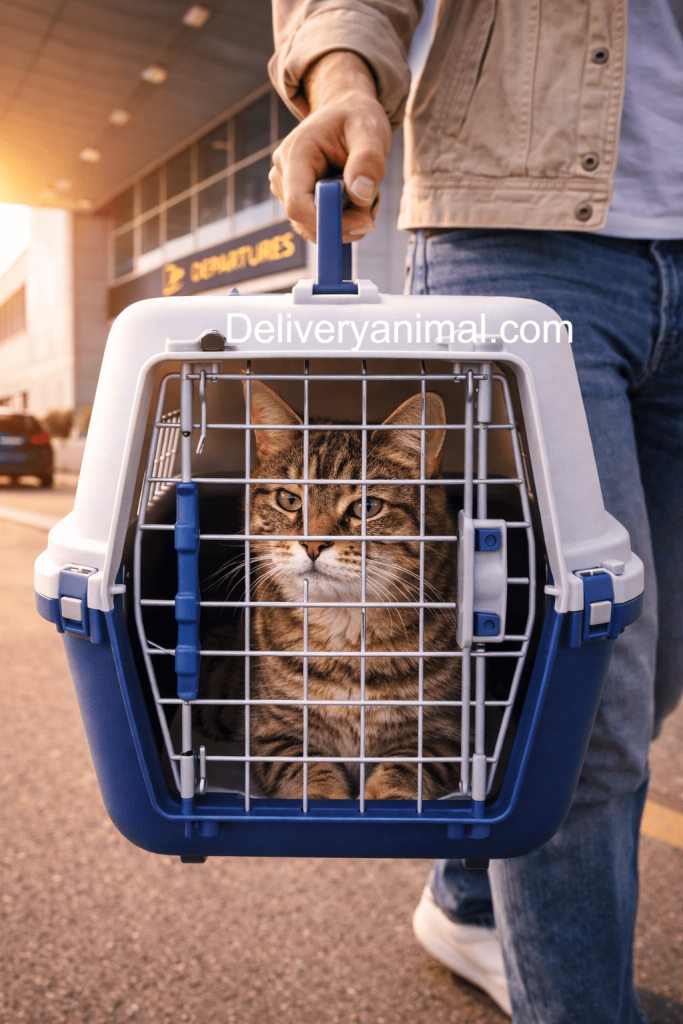
Many airlines have increased the allowable weight for cabin transport to 10 kg, including the soft carrier bag. However, remember that the carrier must fit completely under the seat in front of you and have a waterproof bottom.
Dogs in the Cargo Hold (AVIH)
For large breeds (over 10–12 kg), a rigid IATA-standard container is mandatory. In 2026, ventilation requirements were tightened: the container must have mesh openings on all four sides.
6. Italian Laws: Leash, Muzzle, and Insurance
Italy is a society-focused country regarding safety. After successfully importing dogs to Italy, you become subject to local legislation.
- The Leash: Leash length in urban settings must not exceed 1.5 meters. Using retractable leashes at maximum length in crowded areas may result in a fine.
- The Muzzle: You are not required to have it on the dog constantly, but you must always have it with you (in your pocket or bag). It must be worn upon the request of authorities or when entering public transport/shops.
- Cleaning: Failure to have waste bags during a police check is grounds for a fine ranging from €50 to €300.
- Insurance: In 2026, third-party liability insurance (Responsabilità Civile) is highly recommended, and for certain breeds deemed potentially dangerous, it may be mandatory in specific municipalities.
Conclusion Based on Official Data
Analyzing current requirements from the Italian Ministry of Health, it is evident that importing dogs to Italy in 2026 has become more digitized. Authorities pay special attention to the authenticity of certificates and the “Chip — Vaccine — Titration” sequence.
Main Advice for Owners: Always carry both originals and digital copies of all documents (QR codes of veterinary passports). If your route involves transit through other countries, ensure their requirements are not stricter than Italy’s.
At DeliveryAnimal, we advocate for ethical cynology and safe transport. We help deliver your future friends from verified breeders who value their reputation and animal health over short-term profit.