
Animal aggression toward children and family members is a serious issue that any household with pets may face. Although most dogs and cats are safe and well-socialized, cases where animal aggression toward children occurs require special attention, careful analysis of causes, and timely prevention. It is important to understand that animal aggression toward children and family members rarely appears without triggering factors and is almost always linked to identifiable behavioral or physiological reasons.
Animal aggression toward children is one of the most discussed topics in pet ownership. Despite the generally social and friendly nature of domestic animals, incidents involving aggression toward children and other family members require thorough evaluation.
The relevance of this topic lies in the fact that animal aggression toward children can arise unexpectedly in everyday situations: during play, feeding, or when a child attempts to interact with a pet. In many cases, aggression toward children and family members signals discomfort, improper socialization, or a lack of clear interaction rules. Therefore, understanding why animal aggression toward children occurs requires a comprehensive approach and the involvement of animal behavior specialists.
DeliveryAnimal.com supports responsible pet ownership and emphasizes reliance on official sources and scientific data.
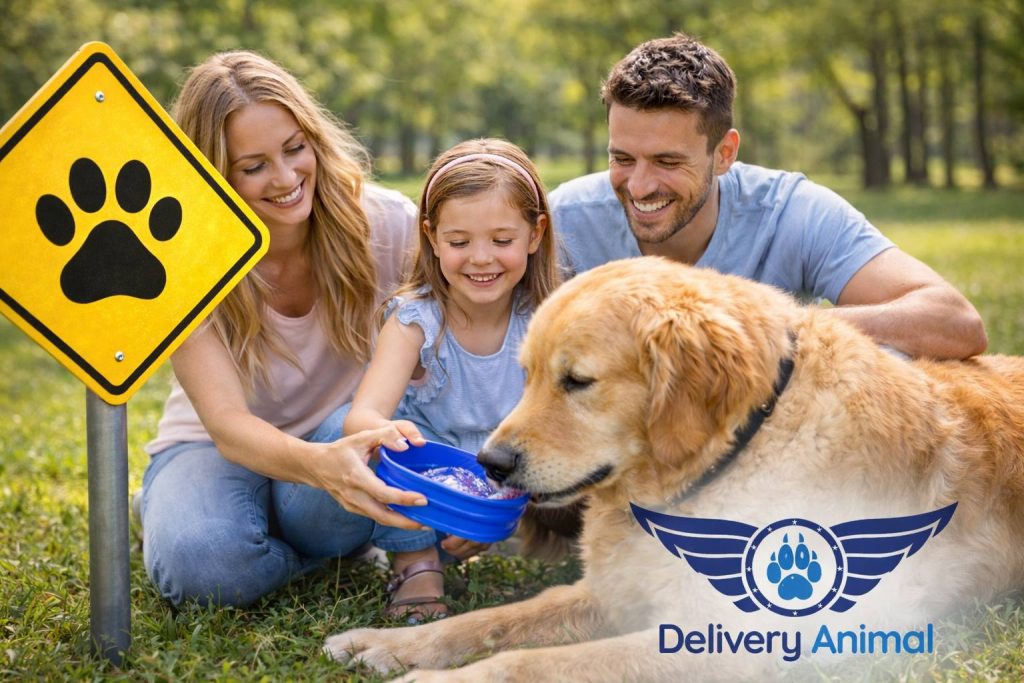
Causes of Animal Aggression: What Official Sources Say
According to the Centers for Disease Control and Prevention (CDC), thousands of dog bite injuries are reported annually, with children considered a high-risk group.
The World Health Organization (WHO) identifies lack of socialization, improper interaction between children and animals, and insufficient adult supervision as major risk factors.
Main causes of aggression in domestic animals:
1. Fear and Stress
Animals may display defensive behavior when frightened. Loud noises, sudden movements, and intrusive contact are common triggers.
2. Resource Guarding
The American Veterinary Medical Association (AVMA) notes that aggression is often linked to protection of food, toys, or territory.
3. Pain or Illness
Veterinary professionals emphasize that sudden behavioral changes may be related to medical conditions.
4. Poor Socialization
The ASPCA highlights that early puppy socialization is critical for developing stable behavior.
Why Children Are at Higher Risk
Behavioral Characteristics of Children
Young children often:
- approach too closely to an animal’s face;
- hug pets tightly;
- pull fur or tails;
- disturb animals while eating or sleeping.
According to the American Academy of Pediatrics (AAP), most incidents occur in familiar home environments and involve a family dog.
This confirms that the issue is more often linked to lack of supervision and education rather than a “dangerous breed.”
Aggression Prevention: A Comprehensive Approach
Effective prevention of animal aggression is built on three pillars: pet training, child education, and adult supervision.
Dog Socialization and Training
Early socialization and consistent training significantly reduce the risk of aggressive behavior.
AVMA emphasizes that positive reinforcement and regular training create stable behavioral patterns.
Important steps include:
- exposing puppies to different people and environments;
- reinforcing basic commands;
- avoiding physical punishment.
Teaching Children Safety Rules
The CDC recommends teaching children to:
- avoid approaching animals while they are eating;
- not disturb pets during sleep;
- avoid direct staring into unfamiliar dogs’ eyes;
- always ask the owner’s permission before interacting.
Constant Adult Supervision
Medical organizations agree that young children should never be left unsupervised with animals, regardless of trust in the pet.
Myths About Animal Aggression
❌ “Aggression depends only on breed.”
WHO and AVMA state that behavior is shaped by genetics, upbringing, living conditions, and owner education.
❌ “If the animal is friendly, supervision isn’t necessary.”
Many incidents occur in familiar environments, highlighting the importance of systematic prevention.
The Role of Responsible Pet Ownership
Child safety is directly connected to responsible pet selection, proper living conditions, and professional guidance.
DeliveryAnimal.com supports:
- educating owners about proper socialization;
- cooperation with licensed transporters;
- responsible pet placement in new homes.
Proper transportation and gradual adaptation reduce stress and lower the risk of behavioral problems.
Expert Conclusions Based on Official Data
Analysis of CDC, WHO, AVMA, and ASPCA recommendations leads to several key conclusions:
- Animal aggression is often a response to stress or fear rather than innate “viciousness.”
- Children are more vulnerable due to behavioral traits and limited understanding of animal signals.
- Systematic socialization and education significantly reduce risks.
- Owner responsibility is the primary safety factor.
Thus, the issue of animal aggression toward children and family members can be addressed through education, prevention, and responsible pet ownership.
Frequently Asked Questions (FAQ)
1. Why do animals show aggression toward children?
Most often, aggression is a response to fear, stress, pain, or resource guarding. Children may not recognize warning signals and may behave unpredictably.
2. Does dog aggression depend on breed?
Behavior results from a combination of socialization, training, environment, and individual temperament. Breed alone is not decisive.
3. Can the risk of bites be completely eliminated?
Risk cannot be fully eliminated, but proper training, supervision, and veterinary care significantly reduce it.
4. Why do most incidents happen at home?
Families often lower their guard in familiar settings and underestimate potential risks.
5. How should children be taught safe interaction?
Teach children not to disturb pets during eating or sleeping, not to pull tails or ears, and to stop interaction if the animal shows discomfort.
6. What signs indicate possible aggression?
Avoidance, tense posture, growling, attempting to move away, or a fixed stare.
7. What should you do if a pet shows aggression?
Consult a veterinarian to rule out medical causes, then seek help from a behavior specialist.
8. Does stress (moving, transportation) affect behavior?
Yes. Environmental changes can trigger stress responses.
9. Should young children be left alone with pets?
Experts do not recommend leaving young children unsupervised.
10. Why is responsible ownership important?
Proper socialization, veterinary care, and informed owners form the foundation of prevention.
Conclusion
Pets bring joy and strengthen family bonds. However, child safety must remain a priority.
Following official guidelines, proper training, child education, and adult supervision create a safe environment for all family members.
DeliveryAnimal.com promotes responsible pet ownership and supports the dissemination of reliable expert information.
You can find even more useful and informative information on our website.