
For humans, smells are part of the “atmosphere”: morning coffee, the smell of rain, the aroma of perfume. For dogs and cats, smell is a full-fledged “map of the world”: information about other animals, people, the state of the environment, and even our mood. Understanding how exactly smells affect the behavior of pets helps to care for them better—reducing stress, training, traveling, and creating a comfortable home.
Why olfaction is so important for cats and dogs
Dogs and cats are mammals with a highly developed olfactory system.
- Dogs have hundreds of millions of olfactory receptors (depending on breed).
- Cats have tens of millions.
- Both also have an additional chemosensory organ—the Jacobson’s organ (vomeronasal organ), which reads pheromones and social chemical signals.
The perceived chemistry helps the animal:
- Recognize another animal (sex, age, reproductive status);
- Understand where and when someone passed by (territory map);
- Assess potential threat and safety;
- Read human emotional signals (some studies show that dogs react to “fear smells” of humans).
Smells and emotions: how animals “feel”
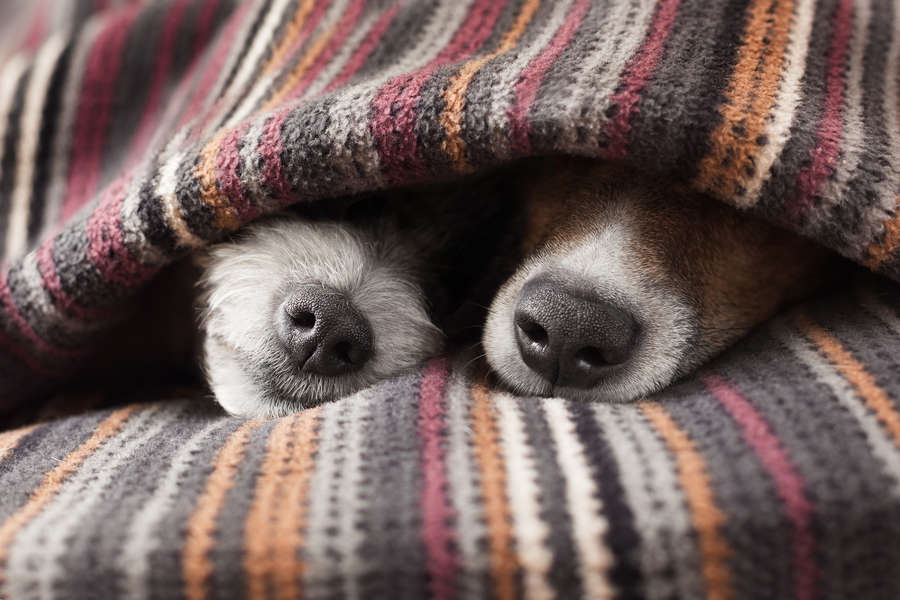
Olfactory signals are closely connected with the limbic system of the brain—the center of emotions and memory. This explains why smells:
- Instantly trigger behavioral reactions (rise, hunt, avoid);
- Are easily associated with memory (e.g., the smell of a clinic causes anxiety in a pet who once experienced stress there).
Practically: a cat comes into a house with a new smell—it sniffs for a few minutes, may perform a “flehmen” reflex (opening lips to direct smell to the Jacobson organ), then decides if it is a threat.
A dog smelling an unfamiliar dog during a walk may mark, bark, or avoid, depending on the signal.
Human smells: pets “read” our emotions
Several studies show that dogs can respond to chemical markers of human emotions. For example, “chemical traces of fear” (released by the body during anxiety) can change a dog’s behavior—it becomes alert or nervous near such a smell. This explains why dogs sometimes get nervous “just because the owner is worried.”
Cats are also sensitive: studies show that cats distinguish smells of familiar and unfamiliar humans and can change behavior depending on these signals.
Positive and negative olfactory reinforcement
Smells are used not only to recognize threats—they can be applied positively:
- Positive reinforcement: the aroma of a favorite treat can motivate a pet to learn (e.g., the smell of chicken teaches a dog to use a training plate).
- Enrichment: placing safe new smells (grass, twigs, familiar objects) in the house stimulates behavior and reduces boredom. Studies show olfactory enrichment improves welfare of animals in captivity.
However, there is also a dark side: unpleasant smells (decay, predators, blood) cause fear and avoidance; smells of other territories can provoke aggression in territorial animals.
Practical situations: how smells affect behavior
- Moving and carriers: a new smell in the carrier frightens pets. Place a familiar blanket with home scent and do not close immediately—let the pet “read” the smells to reduce stress.
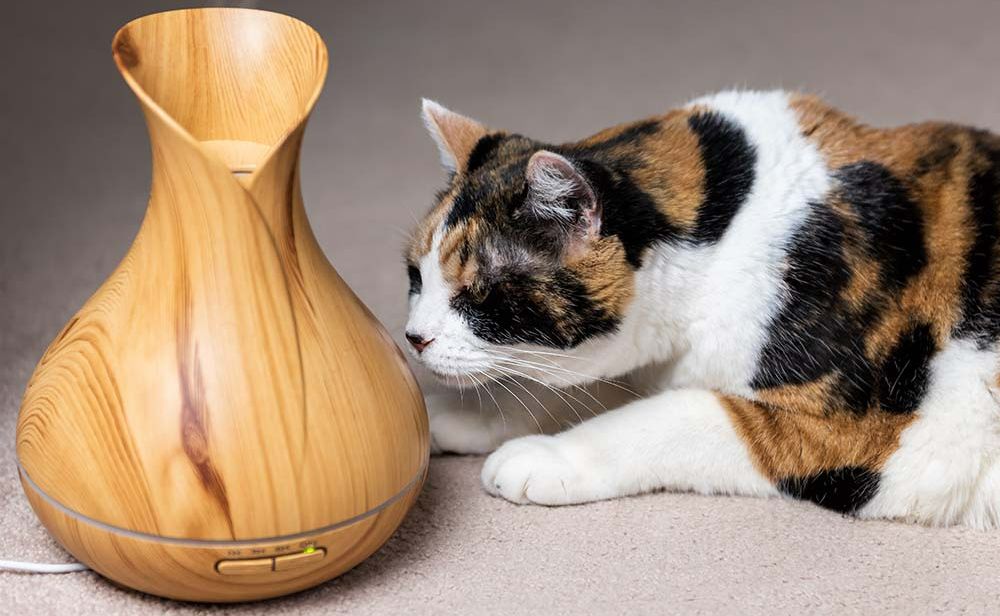
- Veterinary visit: the clinic has a “clinic smell”—many animals remember it and associate it with pain. Avoid strong smells; use pheromone diffusers in the waiting area.
- Socialization with other animals: before introduction, let pets smell each other’s objects (blanket, toy)—a peaceful way to exchange information.
- Work and training (detection): dogs are trained to detect specific smells—from drugs to cancer markers—showing how detailed their “olfactory magnifying glass” is.
How to use smells safely and effectively
- Use familiar smells during moving and travel: blanket, owner’s clothing, favorite toy—helps create a “bridge” to a familiar environment.
- Conduct olfactory enrichment: small “scent zones” can be placed on the floor (pieces of cloth with herb scent, safe essential blocks), without strong chemical odors. This stimulates activity and reduces boredom.
- Be careful with pheromones and “calming” scents: veterinarian-recommended pheromone diffusers often help with threats and fireworks but do not replace behavioral correction.
- Avoid strong air fresheners and household chemicals without ventilation. Some chemicals irritate respiration and change behavior (coughing, anxiety).
- Before introducing animals, allow “olfactory exchange” of objects; do not force face-to-face contact.
Smells as a diagnostic tool: methods and prospects
Science shows: changes in the “olfactory profile” of a human or animal can indicate diseases (metabolic disorders, oncology). Dogs are already trained to detect such signals in some studies; “electronic nose” technology is developing in parallel. This is a promising field in medicine and veterinary science.
Limitations and precautions
- Individual differences: breed, age, health, and experience strongly influence animal reactions to smells. Old or sick animals may lose olfaction.
- Laboratory data are not always fully applicable at home: airflow, odor concentration, and context affect behavior.
- Some essential oils and chemicals are toxic to cats and dogs; aromatherapy should only be used with veterinary approval.
Key summary
- For dogs and cats, smells are the key to understanding the world.
- Smells control emotions: safety, anxiety, interest, and excitement are often “read” first by the nose.
- Owners should use familiar smells, conduct olfactory enrichment, carefully use pheromones, and avoid strong chemical odors.
- Olfactory diagnostics and working with detection dogs are promising, but at home simple practices matter: familiar smells, gradual socialization, and air quality care.
Official sources (recommended)
- Nielsen, B. L. Olfaction — An Overlooked Sensory Modality in Applied Ethology and Animal Welfare. Frontiers in Veterinary Science, 2015. PMC
- Jendrny, P., et al. Canine olfactory detection and its relevance to medical applications. European PMC / PMC8375464, 2021. PMC
- Zhang, L., et al. Dealing With Stress in Cats: What Is New About the Olfactory Strategies? Frontiers in Veterinary Science, 2022. PMC
- Xi, J., et al. Nasal anatomy and sniffing in respiration and olfaction of mammals. Frontiers in Veterinary Science, 2023
- Lazarowski, L., et al. Methodological Considerations in Canine Olfactory Research. 2020. europepmc.org
- Kokocińska, A., et al. Canine Smell Preferences — Do Dogs Have Their Favorite Scents? PMC 2022. PMC