

Modern travel and relocation with pets require strict compliance with regulations. For owners of dogs, cats, and other domestic animals who plan to travel to European Union countries or within the EU, the mandatory document is the EU Pet Health Certificate (EU Pet Passport). It ensures legal movement of pets, confirms their vaccination and health status, and protects against the spread of infectious diseases such as rabies.
In this article, we explain in detail what the certificate is, how to obtain it, what requirements pets must meet, and how to use the document when traveling.
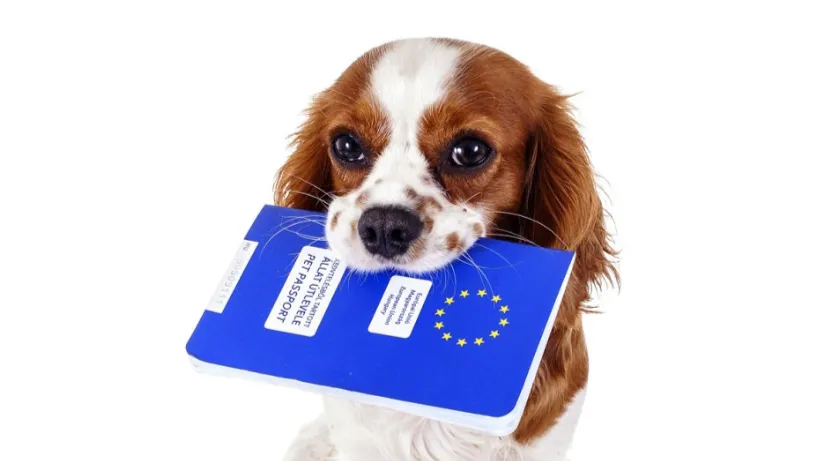
1. What Is the EU Pet Health Certificate?
The EU Pet Health Certificate, also known as the EU Pet Passport, is an official document confirming that a pet meets EU requirements for international movement.
Main functions of the document:
- Confirms vaccination against rabies and other infectious diseases
- Lists the microchip number used for unique identification
- Records rabies antibody titration results when required
- Serves as proof of legal ownership and readiness for travel
The certificate is issued in the name of the pet and its owner and is used for travel within EU countries and in several non-EU countries that recognize the document.
2. Which Animals Can Have the Certificate?
The EU Pet Passport applies to:
- Dogs
- Cats
- Ferrets
It does not apply to exotic animals, birds, reptiles, or livestock. These categories have separate veterinary documentation and movement regulations.
3. Requirements for Obtaining the Certificate
Microchip
- Mandatory pet identification using a microchip compliant with ISO 11784/11785
- The microchip number is recorded in the certificate
Rabies Vaccination
- The pet must be vaccinated after the microchip has been implanted
- Some EU countries require a rabies antibody titration test
Age Requirements
- The pet must be at least 12 weeks old for the first rabies vaccination
Overall Health
- A licensed veterinarian must confirm the pet’s good health and absence of infectious diseases
4. How to Obtain the EU Pet Health Certificate
The process includes several steps:
Visit a licensed veterinarian
- Only accredited veterinarians can issue the EU Pet Passport
- Examination of the pet, verification of microchip and vaccines
Filling out the document
- Owner and pet information
- Vaccination and preventative treatment records
- Veterinarian’s signature and official stamp
Issuance of the certificate
- After the procedures, the owner receives the Pet Passport
- The document is valid for travel within the EU and countries that recognize the passport
Tip: keep copies of all pages and update the passport after each new vaccination.
5. Why the Certificate Is Required for Travel
The EU Pet Passport is needed for:
- Travel between EU countries
- Veterinary visits in the EU requiring proof of vaccination
- Transporting pets through airports and seaports
- Participation in contests, exhibitions, and competitions
The certificate simplifies border control and eliminates the need to obtain separate veterinary certificates for each country.
6. Differences Between EU Countries
Although the EU Pet Passport is valid across the EU, some countries have additional requirements:
- Finland, Ireland, United Kingdom: rabies antibody titration test may be required
- Germany, France, Italy: strict checks for microchip validity and vaccination compliance
- Spain, Portugal: deworming certificate is recommended
Before travel, always check country-specific rules via official veterinary websites.

7. Tips for Preparing Your Pet for Travel
- Update vaccinations and parasite treatments on time
- Ensure your pet’s microchip registration is active and data is correct
- Train your pet to stay in a carrier or travel crate
- Collect all documents: passport, certificates, titration test results
- Check airline or transport company requirements for pet travel
8. Scientific and Legal Basis
The EU Pet Passport is regulated by Regulation (EU) 576/2013 on the movement of pets.
Additional official guidance comes from:
- The European Food Safety Authority (EFSA), particularly regarding rabies prevention
- National veterinary authorities such as:
- GOV.UK
- Bundesministerium für Ernährung und Landwirtschaft (Germany)
- Ministère de l’Agriculture (France)
9. Conclusion
The EU Pet Health Certificate is not just a formality — it is a crucial tool for ensuring the safety and well-being of your pet.
It:
- Confirms vaccination and health
- Allows legal travel across the EU
- Simplifies airport and border checks
Timely issuance of the EU Pet Passport and adherence to regulations make traveling with your pet safe, comfortable, and stress-free.
Official Sources
- European Commission — EU Pet Travel Rules
https://ec.europa.eu/food/animals/pet-movement_en - GOV.UK — Pet Travel to the EU
https://www.gov.uk/bringing-pet-to-uk - Bundesministerium für Ernährung und Landwirtschaft — Haustierausweis
https://www.bmel.de/DE/themen/tiere/tierschutz/haustierausweis.html - Ministère de l’Agriculture France — Passeport pour animaux de compagnie
https://agriculture.gouv.fr/passeport-pour-animaux-de-compagnie - EFSA — Rabies Control and Pet Travel
https://www.efsa.europa.eu/en/topics/topic/rabies