

Every cat or dog owner eventually wants to better understand what their pet is feeling: joy, fear, pain, anxiety, or pleasure. Animals cannot express themselves in words, but they communicate emotions through body language, facial expressions, and behavior. In recent years, the question has increasingly arisen: can artificial intelligence (AI) help “read” animal emotions, similar to how it is done with humans?
AI is being trained to recognize mood, state, and stress in animals using video and audio analysis, computer vision, and machine learning. This topic may seem like science fiction — but there is a growing body of research, technologies, and prototypes around it.
This article provides an honest overview: what AI can already do, what remains hypothetical, what myths exist around the topic, and why it’s important for any pet owner — whether of a cat or a dog — to be aware of these developments.
🔎 Why AI Is a Promising Tool
Objectivity and scale
Humans sometimes misinterpret animal behavior due to emotions, fatigue, or bias. AI is neutral: it can analyze video, sound, movement, body posture, facial expressions, tail and ear positions, and make conclusions based on algorithms.
Early detection of problems
Sometimes subtle changes — reduced activity, altered gait, restless sleep — go unnoticed by the human eye. AI can detect such changes from photos/videos and alert the owner.
Help when you are busy
If you are away from your pet, an AI-enabled home camera can analyze behavior and send notifications like “pet is stressed” or “lying down for a long time,” which may indicate pain or illness.
Versatility
Machine learning and computer vision algorithms can potentially work across different breeds, ages, and species: cats, dogs, and other domestic animals. These systems rely on technologies long used for recognizing human emotions, movements, and behavior.
👍 What AI Can Already Do

AI systems recognize posture, gait, and body position, helping evaluate whether a pet is active, awake, sleeping, or resting. This is especially useful for elderly or sick animals.
Some experimental projects attempt to detect signs of stress or fear: trembling, tense body posture, shaking ears or tail, aggressive facial expressions — all of which can be captured and analyzed by algorithms.
Machine learning is used in animal behavior research to classify basic emotions or states: rest, walk, anxiety, interaction, aggression.
While these capabilities are basic, they already show that AI can serve as a “second eye” on a pet’s condition, assisting owners who cannot constantly observe their animals.
⚠️ Myths and Limitations
❗ Myth 1: “AI knows exactly what my cat/dog is feeling”
Fact: Not exactly. Animal emotions are more complex than they seem. What a person perceives as fear may be tiredness, overexertion, or simply an unfamiliar environment. AI can only indicate behavioral, posture, sleep, or activity changes. It is not a “conduit” for feelings.
❗ Myth 2: “If AI says ‘everything is fine,’ there are no problems”
Fact: There is no guarantee. Some illnesses, pain, or internal issues may not be externally visible. AI might not detect internal changes, organ pain, or infections.
❗ Myth 3: “Only AI is needed — no need to care for the pet”
Fact: AI is a tool. It does not replace proper care, nutrition, attention, regular veterinary visits, love, and attention. Never.
Technical challenges include: different breeds, sizes, and colors — it is difficult for algorithms to adapt to all. Context matters: home behavior ≠ outdoor behavior, stressful situations, noise, unfamiliar smells, etc. Ethical considerations: never blindly trust a machine — humans must remain responsible.
🧠 Scientific Basis: Animal Emotions + AI
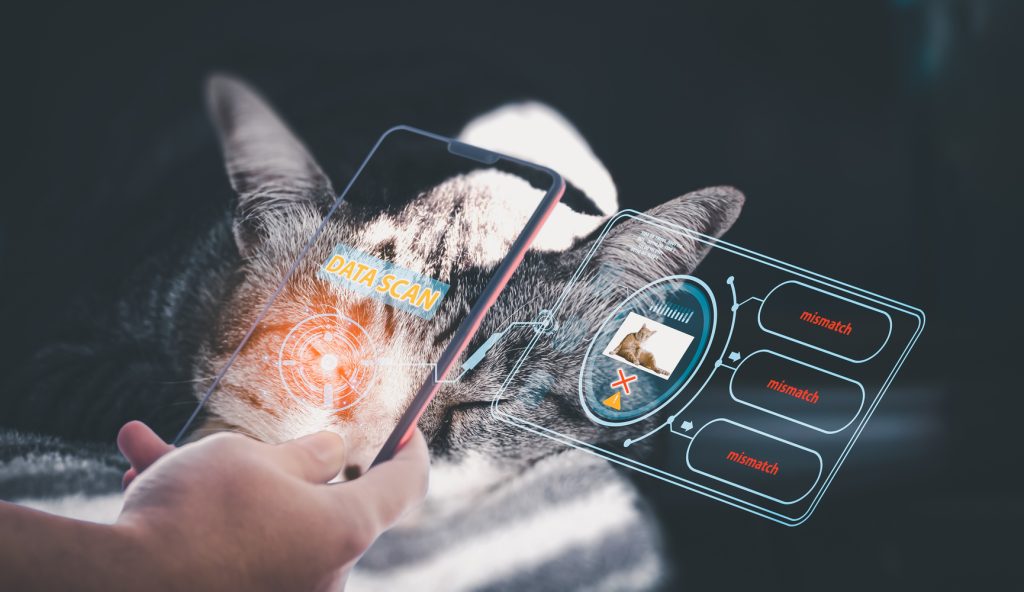
Science acknowledges that animals have emotions — fear, joy, stress, pain, comfort — as described in ethology and zoology research.
Computer vision and machine learning algorithms are standard tools for recognizing patterns, signals, movements, and behavior. Combining these approaches creates potential: AI can not only track movements but also assess the state of the animal based on observations, databases, and behavioral patterns.
💡 Why Pet Owners Should Consider AI Today
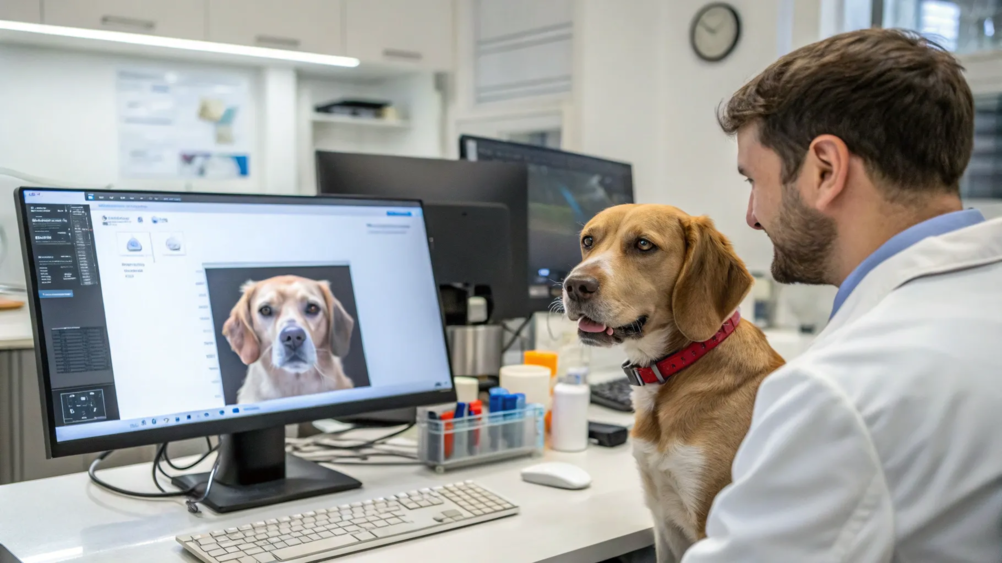
If you want to provide the best care for your pet, AI can be a helpful assistant:
- Monitoring when the pet is alone — reducing risks for elderly or sick animals;
- Detecting behavioral changes in time — potentially saving health;
- Helping while you are busy or at work;
- Providing an additional “eye” for elderly animals who need more rest;
- Supporting adaptation during moves, noisy environments, or stress — AI can detect warning signs.
If you love your pet, consider whether it’s time to implement technology.
Recommendations:
- Find a suitable system (camera + software) and observe your pet;
- Pay attention to behavior, reactions, and activity;
- Consult a veterinarian at the slightest deviations;
- Don’t give all responsibility to AI — remain attentive and caring;
- Support your pet: play, walk, care, and love.
AI is a helper, but love, care, and attention remain the foundation of well-being.
🔗 Official Sources and Articles
- Emotion in animals — how science studies animal emotions
- Animal behaviour — general overview of animal behavior, communication mechanisms, signals, and the basis for understanding emotions
- Computer vision — image and video recognition technologies, the basis for AI systems
- Machine learning — methods used to build AI recognition models
- Neural network — key AI tool for analyzing animal data