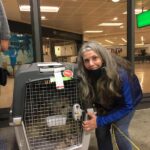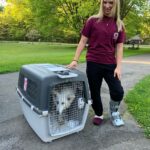

Dog and Cat Transport from Georgia to Switzerland: What Owners Need to Know
Dog and cat transport from Georgia to Switzerland requires careful preparation, compliant veterinary documents, and a suitable travel plan. Switzerland has specific entry requirements for pets arriving from countries outside the European Union. The applicable rules depend on the country’s rabies-risk classification, the pet’s vaccination history, and whether the movement is non-commercial or commercial.
If you are relocating to Zurich, Geneva, Basel, or another Swiss city with your pet, start planning well before your intended departure date. Where a rabies antibody titre test and a waiting period are required, the preparation process can take several months.
It is also important to distinguish between travelling with your own pet and shipping an animal for sale or transfer to another owner. These situations may be subject to different veterinary and import procedures.
Delivery Animal helps pet owners coordinate international animal transport, review destination requirements, prepare documentation, and plan suitable routes.
Documents Required for Dog and Cat Transport from Georgia to Switzerland
Before booking a flight, check the documentation required for your particular pet and travel category.
For a typical non-commercial movement, the required documents may include:
- Microchip identification with a unique number.
- Rabies vaccination records confirming a valid vaccination.
- Rabies antibody titre test results, where required.
- Official veterinary health certificate in the format applicable to entry into Switzerland.
- Laboratory report confirming the antibody titre, if testing is required.
- Swiss import authorisation, where applicable to the country of origin and route.
- Airline booking confirmation and any additional documents required by the carrier.
- Owner declarations or supporting paperwork required under the applicable procedure.
A veterinary passport alone does not automatically authorise entry into Switzerland. The correct official certificate and supporting documents must be prepared according to the rules in force on the travel date.
Check the current requirements on the official website of the Swiss Federal Food Safety and Veterinary Office (FSVO).
Microchip and Rabies Vaccination Requirements
An important stage of dog and cat transport from Georgia to Switzerland is verifying the animal’s identification and vaccination history.
Microchip identification
The microchip must meet the applicable identification standards and be readable with a compatible scanner. Its number must match the information recorded in the veterinary documents and laboratory report.
The animal should be microchipped before rabies vaccination so that the vaccination can be recognised for entry under the applicable rules. If the pet was vaccinated before the microchip was implanted, ask the competent veterinary authority to review the records before arranging travel.
Rabies vaccination
Primary rabies vaccination is generally administered no earlier than 12 weeks of age. A waiting period of at least 21 days normally applies after a primary vaccination before it becomes valid for travel.
However, vaccination alone may not be sufficient for animals arriving from countries subject to additional rabies-control requirements.
If a previous vaccination has expired, a new vaccination may be treated as a primary vaccination. This can affect the timetable for antibody testing and the earliest possible travel date.
Rabies Antibody Titre Test and Waiting Period
Dog and cat transport from Georgia to Switzerland may require laboratory evidence that rabies vaccination has produced a sufficient antibody response.
Before starting the process, check Georgia’s current classification under the Swiss rabies-risk rules. Requirements can change, so do not rely solely on information from an older travel guide or an airline.
If an antibody titre test is required, the process generally involves:
- Implanting the microchip and checking the identification number.
- Ensuring that the rabies vaccination is valid.
- Collecting a blood sample at least 30 days after the primary vaccination, subject to the applicable vaccination rules.
- Sending the sample to a laboratory recognised for the required test.
- Obtaining a result of at least 0.5 IU/ml.
- Observing the required waiting period, which may be at least three months from the blood-sampling date for animals arriving from countries classified as high rabies risk.
The laboratory result must be documented in an official report. A repeat test may not be necessary after a satisfactory result if subsequent rabies vaccinations remain valid and there has been no lapse in vaccination coverage.
Important: Where a waiting period applies, it is calculated from the date the blood sample was collected, not the date the laboratory result was issued. Confirm the current requirements with the Swiss authorities before choosing a departure date.
Official references:
Is an Import Permit Required for Switzerland?
An import authorisation from the FSVO is required for certain categories of pets arriving from countries classified as presenting a high rabies risk.
For qualifying direct air imports, Swiss rules may require prior authorisation when an animal travels with its owner and is not intended to be transferred to a new owner. The applicable conditions depend on the origin, route, and type of movement.
Where required, the application must be submitted online at least 21 days before the planned import. An import permit does not replace the other entry requirements: microchip identification, valid rabies vaccination, antibody testing, and any applicable waiting period must still be satisfied.
Review the official FSVO guidance for travelling with pets before booking the journey.
If the pet is travelling unaccompanied, being sold, or being transferred to a new owner, the movement may fall under a different import category. Additional veterinary, customs, or commercial documentation may be necessary.
Flights for Dog and Cat Transport from Georgia to Switzerland
The best route depends on the departure city in Georgia, the final destination in Switzerland, the animal’s size, and the airline’s pet policy.
Pet transport to Zurich
Zurich may be a convenient arrival point for destinations in central and eastern Switzerland. Before booking, confirm whether the pet can travel in the cabin or aircraft hold and which documents must be presented on arrival.
If your route includes a connection, check the requirements for every flight segment and whether the pet must be checked in again during transit.
Pet transport to Geneva
Geneva may be suitable for destinations in western Switzerland. If your pet’s origin or route triggers an import-permit requirement, confirm the authorisation and arrival procedures before finalising the itinerary.
Connecting flights and transit requirements
A connecting itinerary may introduce additional airline or transit-country rules. Confirm that the animal is accepted on every flight, that the transfer time is sufficient, and that the pet will be handled appropriately during the connection.
Do not assume that a carrier’s general pet policy guarantees acceptance on a specific flight. Approval can depend on the operating airline, aircraft type, pet size, carrier dimensions, and the number of animals already booked.
Cabin, aircraft hold, or cargo transport
- Cabin travel: May be available for pets that meet the airline’s weight and carrier-size limits.
- Aircraft hold: May be possible when the airline accepts animals in approved travel crates on the specific route.
- Cargo transport: May be necessary for some routes, larger animals, or shipments travelling without the owner.
Commercial imports and unaccompanied shipments may require separate veterinary and customs procedures.
Preparing Your Dog or Cat for the Flight
To make dog and cat transport from Georgia to Switzerland more organised, prepare the animal and its documents well in advance.
Before booking:
- Check the microchip number and vaccination records.
- Confirm whether a rabies antibody titre test is required.
- Calculate the testing and waiting-period timeline.
- Determine whether an FSVO import permit is needed.
- Confirm the airline’s acceptance rules and carrier specifications.
Before departure:
- Choose an airline-compliant carrier of the correct size.
- Help your pet become comfortable with the carrier before the journey.
- Keep original veterinary documents accessible.
- Prepare identification and emergency contact details.
- Check transit rules and connection arrangements.
- Discuss feeding, hydration, and fitness to travel with your veterinarian.
Do not administer sedatives unless your veterinarian specifically recommends them and the airline permits their use. Sedation can create additional risks during air travel.
How Delivery Animal Can Help
International pet transport involves several coordinated stages: veterinary preparation, laboratory testing, official certificates, route planning, and airline approval.
Delivery Animal can help with:
- Reviewing the applicable entry requirements.
- Planning the documentation process.
- Establishing a timeline for veterinary procedures.
- Coordinating suitable transport options.
- Checking airline pet policies.
- Planning the journey to Zurich, Geneva, or another Swiss destination.
To assess your case, provide your pet’s species, breed, age, departure city, intended travel date, vaccination history, and any existing rabies antibody titre results.
Planning early helps identify potential documentation issues before they affect the travel date.
Frequently Asked Questions
How long does dog and cat transport from Georgia to Switzerland take?
The timeline depends on the pet’s vaccination history and whether antibody testing is required. If a new test and a three-month waiting period apply, preparation may take several months. Additional time may be needed for an import permit.
Is a rabies antibody titre test required?
That depends on the current Swiss classification of the country of origin and the rules applicable on the travel date. Check the official FSVO guidance before booking.
Do I need an FSVO import permit?
An import permit is required for certain routes and categories of animals arriving from countries with a high rabies risk. Where the rules require it, the application must be submitted at least 21 days before import.
Can my pet travel without me?
This may be possible, but unaccompanied shipments can fall under different import rules. Confirm the applicable veterinary, customs, and transport requirements before booking.
Can a puppy or kitten younger than seven months enter Switzerland?
Entry from countries classified as high rabies risk can be restricted for young animals because of vaccination, antibody-testing, and waiting-period requirements. Check the current FSVO rules before making arrangements.
Conclusion: Plan Dog and Cat Transport from Georgia to Switzerland in Advance
Dog and cat transport from Georgia to Switzerland requires advance planning, compliant identification, valid rabies vaccination, antibody testing where applicable, and confirmation of the airline’s transport conditions. Some routes may also require an import authorisation from the Swiss veterinary authority before departure.
Start preparing early and verify the requirements for your specific pet and route before purchasing tickets. Delivery Animal can help coordinate the key stages of your pet’s international journey.
Official Sources
- Swiss Federal Food Safety and Veterinary Office (FSVO)
- Preparing to travel with pets
- Online application for pet import authorisation
- Swiss Rabies Centre