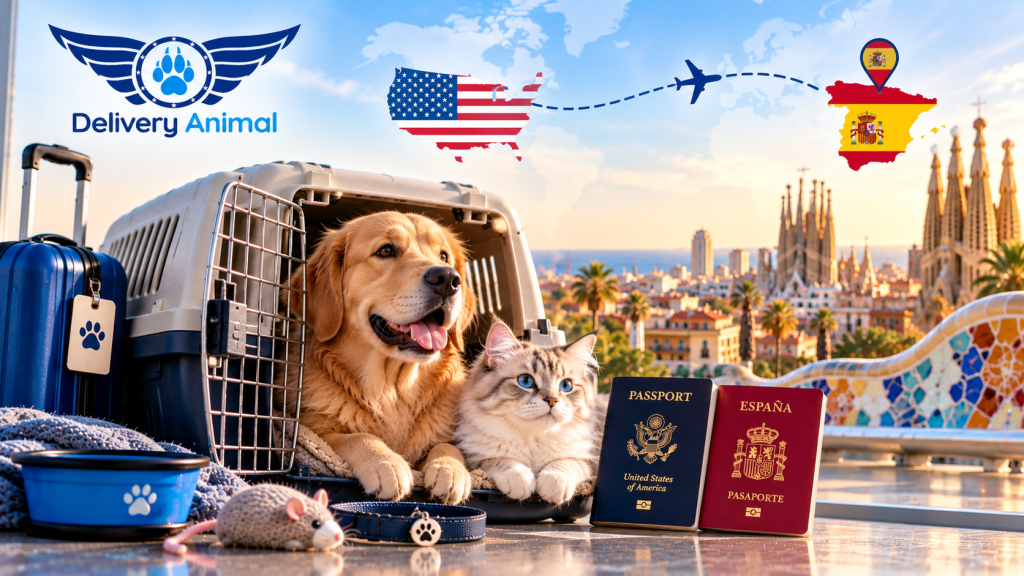

Pet Transport from the USA to Spain: What Pet Owners Need to Know
Pet transport from the USA to Spain requires advance planning, the correct veterinary documents and an airline-approved travel arrangement. Whether you are relocating to Spain, moving for work, joining family or arranging international transportation for a pet, you should check the applicable requirements before booking a flight.
Delivery Animal helps pet owners organise international animal transportation, review route requirements and coordinate suitable travel arrangements. Pet transport from the USA to Spain may involve a cat, dog or another animal, but the entry rules depend on the species. The requirements described in this guide primarily concern dogs, cats and ferrets.
The process also depends on whether the pet travels with its owner, is accompanied by an authorised person or is shipped separately. These circumstances can determine which veterinary certificate and transport procedures apply.
In 2026, it is particularly important to check the latest European Union certificate forms and official instructions. Requirements can change, so owners should confirm the applicable documents for their departure date rather than rely on older online guides.
Documents Required for Pet Transport from the USA to Spain
The documents needed for pet transport from the USA to Spain depend on the animal, the purpose of the journey and whether the movement qualifies as non-commercial or commercial.
Before making travel arrangements, check the following:
- Microchip identification: Dogs, cats and ferrets entering the EU generally need compliant identification. The microchip number must match the animal’s veterinary records.
- Rabies vaccination records: The vaccination must meet EU requirements and be valid for the planned travel date.
- EU animal health certificate: A suitable certificate must be completed by an authorised veterinarian and endorsed by USDA APHIS where required.
- Owner and pet details: Names, identification details and other information must be consistent across the documents.
- Non-commercial declaration: This may be required when the animal travels under the non-commercial pet movement rules.
- Additional documents: Commercial movements or certain transport arrangements may require a different certificate and additional procedures.
Pet transport from the USA to Spain should not be arranged on the assumption that a US veterinary record or a routine health certificate automatically replaces the EU animal health certificate. Confirm the exact document requirements for your circumstances before departure.
Microchip and Rabies Vaccination Requirements
Microchip identification and rabies vaccination are central requirements for dogs, cats and ferrets entering Spain from the United States.
The microchip must be readable and correctly recorded. Under EU rules, identification generally needs to take place before the rabies vaccination, or on the same date in the manner accepted by the applicable rules. If the vaccination was administered before compliant identification, it may not be recognised for entry purposes.
For a primary rabies vaccination, a waiting period of at least 21 days generally applies before travel to the EU. A booster vaccination may be accepted without a new waiting period if the previous vaccination remained valid and the vaccination history meets the applicable requirements.
When planning pet transport from the USA to Spain, review the vaccination dates and microchip information well before booking. If there is a gap in the vaccination history, the animal may need a new primary vaccination and the relevant waiting period.
Ask your veterinarian to verify the records and confirm that they meet the EU entry requirements for the intended travel date.
Is a Rabies Antibody Titration Test Required?
A rabies antibody titration test is required for animals entering the EU from certain countries, while exemptions apply to listed countries that meet the EU’s conditions.
For a pet travelling from the United States, do not assume that a test is automatically required or automatically unnecessary. Check the current EU country list and USDA APHIS guidance for the animal’s circumstances and departure date.
If a test is required, the process can affect the travel schedule. Owners should confirm the approved laboratory, blood-sampling requirements and any waiting periods before arranging flights.
Pet transport from the USA to Spain should therefore begin with a review of the individual pet’s vaccination history and the current official requirements, rather than relying on a general rule that may not apply to every case.
EU Animal Health Certificate for Entry into Spain
Dogs, cats and ferrets travelling from the United States to Spain generally need the relevant EU animal health certificate. The certificate must be completed through the appropriate veterinary process, including USDA APHIS endorsement where required.
The type of certificate depends on the circumstances of the movement.
Non-commercial pet movement
A non-commercial certificate may apply when the pet travels with its owner or with an authorised person within the permitted five-day period surrounding the owner’s journey, subject to the applicable conditions.
The non-commercial route also has rules concerning the number of animals and the purpose of the movement. Owners may need to complete a declaration confirming that the movement is not for sale or transfer of ownership.
Before departure, verify the current certificate form, completion deadlines and endorsement procedure with USDA APHIS and the relevant EU guidance. Do not use an old form without confirming that it remains valid for the planned journey.
Commercial movement or a pet travelling separately
If the animal is being transported for sale, ownership is being transferred or the journey does not qualify as non-commercial movement, different rules may apply. An animal travelling separately from its owner may also require a different assessment depending on the arrangements and timing.
Commercial movements can involve additional veterinary certification, advance arrangements and border procedures. Pet transport from the USA to Spain should be classified correctly before the transport provider or veterinarian begins preparing the documents.
If you are unsure which category applies, explain the full circumstances to an accredited veterinarian and confirm the process with USDA APHIS before booking.
Airline Options for Pet Transport from the USA to Spain
Air travel is often the most practical way to move a pet between the United States and Spain. However, airlines have different policies, and not every carrier accepts animals on every route.
Pet transport from the USA to Spain may be arranged in one of three main ways:
- In the passenger cabin: Some airlines allow small cats or dogs to travel in an approved carrier under the seat. Weight limits, carrier dimensions and the number of animals permitted vary.
- In the aircraft hold: This option depends on the airline’s policy, aircraft type and operational conditions.
- As air cargo: Cargo transport may be appropriate when the animal travels separately or when the airline does not accept it as accompanied baggage.
Before buying a ticket, confirm that the airline accepts your pet on the specific flight. Ask about carrier dimensions, total weight limits, check-in procedures, documentation and any restrictions on connecting flights.
The transport plan should cover the entire journey, including airport waiting time, transfers and handovers between airlines. A flight that appears convenient may not be suitable if the airline cannot confirm the animal’s acceptance for every segment.
Choosing the Best Route from the USA to Spain
The best route depends on the departure city, the destination in Spain, flight availability and the pet’s needs. A direct flight may reduce the total journey time, while a connecting route may provide more options but require additional coordination.
When planning pet transport from the USA to Spain, consider:
- Whether the airline accepts animals on the intended flight.
- Whether the pet can travel in the cabin, hold or as cargo.
- Whether the connecting airport has any special animal transit procedures.
- Whether every airline on the itinerary has confirmed acceptance.
- Whether the arrival airport is appropriate for the planned entry procedures.
Avoid unnecessary connections when a suitable alternative is available. The most practical route is one that can be confirmed in advance and offers appropriate arrangements for the animal throughout the journey.
Preparing an Airline-Approved Pet Carrier
The carrier must meet the selected airline’s requirements and provide suitable conditions for the animal. Carrier specifications differ depending on whether the pet travels in the cabin, in the hold or as cargo.
Before pet transport from the USA to Spain, check that:
- The carrier meets the airline’s size and weight limits.
- Doors, locks and fastenings are secure.
- Ventilation is adequate.
- The animal has enough room to lie down and change position comfortably.
- Bedding and absorbent materials meet the carrier’s instructions.
- Required identification and contact details are attached.
Introduce the carrier at home well before departure. Gradual familiarisation can help the animal become more comfortable with the travel environment.
Do not give sedatives unless a veterinarian specifically recommends them after assessing the animal and the journey. Medication can affect an animal’s response to transport and should never be used without professional guidance.
How Much Does Pet Transport from the USA to Spain Cost?
The cost of pet transport from the USA to Spain depends on the departure city, destination, airline, travel date, animal size, carrier dimensions and transport category.
Additional costs may include veterinary appointments, preparation of official documents, USDA APHIS endorsement, cargo handling and ground transportation.
To request an estimate, prepare the following details:
- Departure city and state in the USA.
- Destination city in Spain.
- Preferred travel date or date range.
- Animal species, breed and age.
- Animal weight and carrier dimensions.
- Microchip and rabies vaccination status.
- Whether the owner will accompany the pet.
- Whether the journey involves a sale or transfer of ownership.
Cabin transport for a small cat may have a very different cost structure from cargo transportation for a large dog. A reliable estimate should account for the complete journey and the documentation procedures that apply to the specific case.
How Delivery Animal Helps Arrange Pet Transport from the USA to Spain
Delivery Animal helps pet owners plan international animal transportation, review route requirements and coordinate suitable travel arrangements.
For pet transport from the USA to Spain, the first step is to establish the departure city, destination, travel date, species and size of the animal, and whether the pet will travel with its owner.
Depending on the agreed service, preparation may include reviewing route requirements, considering available transport options and coordinating travel details. The specific services available should be confirmed with Delivery Animal before booking.
Starting early gives owners more time to check the documents, arrange veterinary appointments and confirm the airline’s conditions. It also makes it easier to identify potential issues before the travel date.
Frequently Asked Questions About Pet Transport from the USA to Spain
What documents are needed to take a pet from the USA to Spain?
Dogs, cats and ferrets generally need compliant identification, valid rabies vaccination records and the appropriate EU animal health certificate. The exact requirements depend on the circumstances of the journey and whether it is classified as non-commercial or commercial.
Does my pet need a microchip before rabies vaccination?
For entry under EU rules, identification generally needs to be completed before the rabies vaccination or in an accepted procedure on the same date. Ask your veterinarian to check the records before travel.
Is a rabies antibody test required for pets travelling from the USA?
The requirement depends on the current EU rules and applicable country listing. Confirm the requirement for your exact circumstances with official EU guidance and USDA APHIS before arranging travel.
Can my pet travel to Spain without me?
This depends on the transport arrangements and whether the journey qualifies as non-commercial movement. If the pet is sent separately, sold or transferred to another owner, different rules may apply.
Can a cat or dog travel in the aircraft cabin?
Some airlines allow small pets in the cabin if the animal and carrier meet their requirements and a place for the pet is available. Confirm acceptance on the specific flight before booking.
How long does preparation take?
The time required depends on the animal’s microchip and vaccination history, certificate procedures, travel arrangements and any additional tests. Start early so there is enough time to complete all required steps.
How can I arrange pet transport with Delivery Animal?
Provide the departure city, destination in Spain, intended travel date and details about the animal. Delivery Animal can help review the transport options and identify the requirements that need to be checked for your route.
Conclusion: Plan Pet Transport from the USA to Spain in Advance
Pet transport from the USA to Spain requires coordination between US veterinary certification procedures, EU entry rules and airline policies. Microchip identification, rabies vaccination records, the correct health certificate and a suitable travel arrangement are key parts of the preparation.
The most important step is to confirm the current requirements for the specific animal and type of movement before booking. Non-commercial travel with an owner and commercial or unaccompanied transport may require different procedures.
Delivery Animal can help you plan pet transport from the USA to Spain according to your route and the circumstances of the journey. Prepare your pet’s details, departure city, destination and preferred travel date to discuss the available options and next steps.
Official Sources
- USDA APHIS — Pet Travel from the USA to Spain
- European Commission — Bringing Pets into the EU from a Non-EU Country
- USDA APHIS — Pet Travel Process Overview
- USDA APHIS — International Pet Travel FAQs