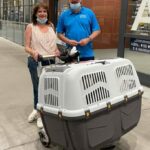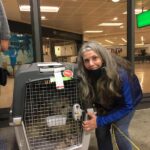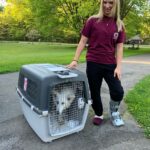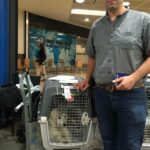
Moving a pet to Colombia requires careful preparation of veterinary documents and transportation arrangements. The main government authority responsible for the import of dogs and cats is the Instituto Colombiano Agropecuario (ICA).
Pet Transportation to Colombia can be arranged with the owner as accompanied baggage or as cargo. Upon arrival, the animal undergoes document and physical inspection, after which ICA may issue the Certificado de Inspección Sanitaria (CIS).
Pet Transportation to Colombia: Main Import Requirements
Before travelling to Colombia, the owner should prepare the required veterinary documentation.
The main requirements may include:
- veterinary certificate from the country of origin;
- valid vaccination records;
- rabies vaccination;
- internal and external parasite treatment;
- veterinary health examination;
- application for ICA sanitary inspection;
- payment of the applicable inspection fee;
- veterinary inspection upon arrival.
The veterinary certificate from the country of origin must be issued or endorsed by the official veterinary authority and should be dated no more than 10 calendar days before entry into Colombia.
Pet Transportation to Colombia: Rabies Vaccination
Rabies vaccination is one of the key requirements for international pet transportation.
If the rabies vaccine was administered for the first time, ICA requires at least 21 days to pass between vaccination and travel. ICA also establishes a minimum entry age of approximately 15 weeks for dogs and cats.
The vaccination certificate should contain:
- vaccine name;
- batch number;
- vaccination date;
- validity period or next vaccination date.
The vaccination schedule should correspond to the animal’s age and species.
Pet Transportation to Colombia: Veterinary Health Certificate
A veterinary health certificate is one of the most important documents for entry into Colombia.
It should contain information about the animal, including:
- species;
- breed;
- sex;
- age;
- color;
- identification details;
- parasite treatment information.
The certificate should confirm that the animal has undergone a clinical examination and is not showing signs of infectious or parasitic disease that would prevent international transportation.
The validity period is particularly important. ICA indicates that the certificate from the country of origin should be issued no more than 10 calendar days before entry into Colombia.
Pet Transportation to Colombia: Parasite Treatment
Dogs and cats entering Colombia must receive appropriate treatment against internal and external parasites.
The treatment should be recorded in the veterinary documentation, including information about the product, active ingredient and date of treatment.
The exact treatment timing should always be checked against the current ICA procedure before travel.
Pet Transportation to Colombia: ICA Registration and CIS
Before arrival in Colombia, the sanitary inspection procedure must be prepared.
ICA uses SISPAP — Sistema de Información Sanitaria para Importación y Exportación de Productos Agrícolas y Pecuarios.
The application contains information about the traveller and the animal. After completing the procedure, the relevant application and payment confirmation should be kept for presentation upon arrival.
Once the pet reaches Colombia, the owner or accompanying person must present the animal to ICA officials at the relevant airport, port or border entry point.
The inspection includes:
- document verification;
- physical inspection of the animal;
- issuance of the CIS — Certificado de Inspección Sanitaria, provided all requirements have been fulfilled.
Pet Transportation to Colombia: Microchip Identification
Microchip identification is an important part of international pet transportation.
Before departure, the identification number should be checked and, where applicable, correctly recorded in the veterinary documentation.
The microchip information should correspond to the animal and its documents.
For routes involving transit countries, the identification requirements of the transit country and airline should also be checked.
Pet Transportation to Colombia: Dogs and Cats
ICA establishes vaccination requirements for both dogs and cats.
For dogs, the official requirements include vaccinations against diseases such as:
- rabies;
- distemper;
- hepatitis;
- leptospirosis;
- parvovirus;
- coronavirus;
- parainfluenza.
For cats, the vaccination requirements include:
- rabies;
- panleukopenia;
- viral rhinotracheitis;
- calicivirus.
The vaccination schedule should be appropriate for the animal’s age and comply with the current requirements of the country of origin and Colombia.
Pet Transportation to Colombia: Restricted Dog Breeds
Special attention is required when transporting certain dog breeds.
ICA indicates that the importation of some potentially dangerous breeds is subject to Colombian legislation. Official information refers to breeds including:
- Staffordshire Terrier;
- American Staffordshire Terrier;
- Bull Terrier;
- Pit Bull Terrier;
- American Pit Bull Terrier;
- certain crosses involving these breeds.
If the dog belongs to one of these breeds or is a crossbreed, its eligibility for entry should be confirmed before purchasing tickets or arranging transportation.
Pet Transportation to Colombia: Air Travel
For long-distance international routes, air transportation is often the most practical option.
Before booking a flight, it is important to check:
- whether the airline accepts dogs and cats;
- whether cabin transportation is available;
- whether cargo transportation is available;
- weight restrictions;
- carrier or crate requirements;
- restrictions for brachycephalic breeds;
- transit requirements;
- whether the pet can travel on every segment of the route.
Large dogs and flat-faced breeds require particularly careful route planning.
Pet Transportation to Colombia: Transit Through Other Countries
A journey to Colombia may involve one or more connections.
For example:
Ukraine → Turkey → Colombia
or:
Europe → Colombia
Each transit country should be checked before the route is confirmed.
The key question is whether the animal remains in the international transit area or passes through border control.
If the pet leaves the international transit zone, additional veterinary or import requirements may apply.
For this reason, the route should be planned together with the veterinary documentation.
Pet Transportation to Colombia: Arrival Procedures
After arrival, the animal must be presented to ICA officials at the relevant point of entry.
The owner should have:
- original veterinary documents;
- vaccination records;
- sanitary inspection application;
- payment confirmation;
- owner’s identification documents;
- transportation documents.
ICA performs document and physical inspections. If the requirements are fulfilled, the sanitary inspection certificate CIS can be issued.
If the requirements are not fulfilled, ICA may apply the veterinary measures established under Colombian regulations, including quarantine or return procedures where applicable.
Pet Transportation to Colombia with Delivery Animal
Delivery Animal organizes international transportation of dogs and cats to Colombia.
Depending on the route, the service can include:
- checking import requirements;
- veterinary preparation;
- vaccination coordination;
- parasite treatment;
- document preparation;
- preparation for sanitary inspection;
- air transportation;
- transit coordination;
- transport crate;
- airport collection in Colombia;
- door-to-door delivery.
Each transportation plan is prepared individually according to the country of departure, destination city in Colombia, breed, age, size and veterinary history of the animal.
Expert Conclusion
Pet Transportation to Colombia should begin with checking the current ICA requirements, preparing the veterinary certificate within the required validity period, confirming valid vaccinations and arranging sanitary inspection upon arrival; the official import requirements for dogs and cats are published by the Instituto Colombiano Agropecuario (ICA).
Delivery Animal can coordinate the transportation of dogs and cats to Colombia, including veterinary preparation, documentation, route planning, air transportation and final delivery.