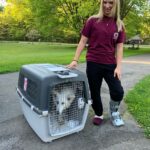

Moving a dog or cat from Turkey to the Balkans is not a single standardized procedure. The Balkan region includes both European Union countries and non-EU states, so import requirements depend on the exact destination country.
Pet Transportation from Turkey to the Balkans can be arranged by air or by land. The route must be planned according to the veterinary requirements of the destination country as well as the rules of every country through which the animal travels.
For destinations such as Serbia, Montenegro, Albania, North Macedonia, Greece, Bulgaria, Croatia and Slovenia, the documentation and entry procedures can differ considerably.
Pet Transportation from Turkey to the Balkans: Which Countries Are Included?
The Balkan region generally includes destinations such as:
- Serbia;
- Montenegro;
- Albania;
- North Macedonia;
- Bosnia and Herzegovina;
- Croatia;
- Slovenia;
- Greece;
- Bulgaria;
- Romania;
- Kosovo.
From an import perspective, however, these countries cannot simply be treated as one group.
Greece, Bulgaria, Croatia, Slovenia and Romania are EU member states and therefore follow EU rules for pets arriving from third countries. Serbia, Montenegro, Albania and North Macedonia have their own national procedures.
This distinction is particularly important when planning a route from Turkey through a non-EU Balkan country and then onward into the European Union.
Pet Transportation from Turkey to the Balkans: Microchip Requirements
Permanent identification is an essential part of international pet transportation.
For entry into the EU from a third country, dogs, cats and ferrets must have an appropriate microchip. Under EU rules, the microchip must be implanted before the rabies vaccination that is being used to meet the entry requirements.
Before departure, it is important to verify:
- the microchip number;
- whether the chip can be scanned;
- the date of implantation;
- the information in the veterinary passport;
- the owner’s details;
- whether the microchip number is identical in every document.
A discrepancy between the microchip number and veterinary documentation can create problems at the border.
Pet Transportation from Turkey to the Balkans: Rabies Vaccination
Rabies vaccination is one of the most important requirements for international pet relocation.
For entry into the EU, the animal must be identified before vaccination. A primary rabies vaccination can be administered from 12 weeks of age, and at least 21 days must pass after the primary vaccination before the animal can travel under the applicable EU rules.
If the animal has received previous vaccinations and the vaccination schedule has remained valid, the situation may be different from a first vaccination.
For Serbia, Montenegro, Albania and other non-EU destinations, the national requirements should be checked separately.
Pet Transportation from Turkey to the Balkans: Rabies Antibody Test
A rabies antibody titration test can be one of the most important parts of preparing an animal from Turkey for travel to the EU.
For entry into the EU from a third country where antibody testing is required, the blood sample must be taken at the appropriate time following vaccination. The test must be performed by an EU-designated laboratory, and the required antibody level is at least 0.5 IU/ml.
For animals subject to the EU waiting-period requirement, the timing between the blood test and travel must also be taken into account.
This is why pet transportation from Turkey to the Balkans should be planned well before the intended departure date.
Pet Transportation from Turkey to the Balkans: Required Documents
Depending on the destination and the status of the animal, the documentation may include:
- veterinary passport;
- microchip identification;
- valid rabies vaccination;
- rabies antibody titration result, when required;
- international veterinary certificate;
- declaration of non-commercial movement;
- owner’s identification documents;
- transportation documents;
- additional documents required by the destination country.
For entry into the EU from a third country, an appropriate EU Animal Health Certificate is generally required for non-commercial movement.
The certificate must correspond to the animal’s identification and vaccination information and be issued or endorsed according to the applicable veterinary procedure.
Pet Transportation from Turkey to the Balkans: EU and Non-EU Destinations
One of the most important steps is determining whether the final destination is inside or outside the European Union.
If the destination is an EU country
For Greece, Bulgaria, Croatia, Slovenia, Romania and other EU member states, EU pet-entry requirements apply.
Depending on the circumstances, these may include:
- microchip identification;
- valid rabies vaccination;
- rabies antibody titration;
- veterinary health certificate;
- entry through an appropriate designated point.
Pets arriving in the EU from third countries must enter through an authorized point where their identification and documents can be checked.
If the destination is Serbia or Montenegro
Serbia and Montenegro are outside the European Union and therefore have their own import requirements.
At the same time, they can be important transit countries for journeys continuing into the EU.
The fact that an animal enters Serbia or Montenegro first does not automatically mean that EU entry requirements can be avoided. The complete travel history and applicable documentation still need to be considered when the animal subsequently enters the European Union.
Pet Transportation from Turkey to the Balkans: Land Transportation
Ground transportation is often convenient for animals that are uncomfortable with air travel.
Advantages can include:
- door-to-door transportation;
- no airport flight for the animal;
- individual supervision;
- convenient transportation for large dogs;
- flexible routing.
However, land transportation requires particular attention to transit countries.
For example, a route such as:
Turkey → Serbia → Hungary → Germany
involves several jurisdictions. The documentation must be suitable for the entire journey, not just for the first border crossing.
The route should therefore be planned before departure.
Pet Transportation from Turkey to the Balkans: Air Transportation
Air travel can be a practical solution for cats, small dogs and certain international routes.
Before booking a flight, it is necessary to check:
- whether the airline accepts pets in the cabin;
- whether cargo transportation is available;
- crate dimensions;
- combined animal and crate weight;
- breed restrictions;
- connecting flights;
- transit-country requirements.
Airline rules are separate from government veterinary regulations.
Even if the animal has all required documents, an airline may refuse transportation if its own requirements are not met.
Pet Transportation from Turkey to the Balkans: Transit Rules
Transit is an important part of international pet transportation.
If an animal travels from Turkey to a Balkan country through another state, the route should be checked in advance.
Important questions include:
- Is transit documentation required?
- Can the animal remain in the international transit zone?
- Is ground transit permitted?
- Will the animal undergo a border inspection?
- Does the transit country have additional veterinary requirements?
- Will the journey continue into the EU?
These questions are particularly important when a non-EU Balkan country is used as part of a route into the European Union.
Pet Transportation from Turkey to the Balkans: Non-Commercial Travel
The rules for private travel with a pet are different from those for commercial transportation.
EU non-commercial pet movement rules generally apply when there is no sale or transfer of ownership involved. Under the applicable EU framework, non-commercial movements can normally involve up to five dogs, cats or ferrets, provided the relevant conditions are satisfied.
If an animal is being sold, transferred to a new owner, transported from a breeder to a buyer, or moved as part of a commercial activity, a different legal framework may apply.
Therefore, the purpose of the transportation should be established before the documentation process begins.
Pet Transportation from Turkey to the Balkans: Preparing for the Journey
The preparation process can be divided into several stages.
Stage 1 — Veterinary preparation
The microchip, rabies vaccination and general vaccination history are checked.
Stage 2 — Laboratory preparation
The need for a rabies antibody test is determined and, if required, the appropriate laboratory procedure is arranged.
Stage 3 — Documentation
The veterinary certificate and other required documents are prepared.
Stage 4 — Logistics
The transportation method, route, transit countries and final destination are selected.
Stage 5 — Final verification
Before departure, the microchip, original documents, vaccination records and transportation arrangements are checked again.
Pet Transportation from Turkey to the Balkans with Delivery Animal
Delivery Animal helps coordinate international transportation of dogs and cats from Turkey to Balkan countries.
Our assistance can include:
- destination assessment;
- route planning;
- veterinary preparation;
- microchip coordination;
- rabies vaccination coordination;
- antibody testing;
- international documentation;
- air transportation;
- ground transportation;
- transit planning;
- delivery to the final address.
Every journey is planned individually according to the animal’s age, breed, size, vaccination history and destination.
Expert Conclusion: Pet Transportation from Turkey to the Balkans
Pet Transportation from Turkey to the Balkans requires individual planning because the Balkan region includes both EU and non-EU countries with different veterinary procedures.
For destinations in the European Union, it is important to follow the current requirements of the European Commission regarding microchip identification, rabies vaccination, veterinary certification and, where applicable, rabies antibody testing with a result of at least 0.5 IU/ml.
According to the European Commission’s official guidance on travelling with pets, animals arriving in the EU from non-EU countries must meet the applicable identification, vaccination and health-certification requirements.
The route itself is equally important. A journey from Turkey to Serbia, Montenegro or another Balkan country cannot automatically be treated in the same way as a journey directly to Greece or Bulgaria. Transit requirements and the animal’s travel history must also be considered.
For this reason, the safest approach is to determine the exact destination first, review the animal’s vaccination and identification history, establish whether an antibody test is necessary, prepare the required documents and only then finalize the transportation route.
Delivery Animal organizes pet transportation from Turkey to the Balkans, coordinating veterinary preparation, documentation, transportation, transit and international logistics for dogs and cats.
FAQ About Pet Transportation from Turkey to the Balkans
Can a dog be transported from Turkey to Serbia?
Yes. The animal must meet the applicable Serbian requirements for identification, vaccination and veterinary documentation.
Is a rabies antibody test required from Turkey to the EU?
It can be required depending on the applicable classification of the country of departure and the animal’s vaccination history. The current EU requirements should always be checked before transportation.
Can I travel from Turkey to Europe through Serbia?
A route through Serbia may be possible, but Serbia cannot simply be used to bypass EU import requirements. When the animal subsequently enters the EU, the applicable European requirements still have to be satisfied.
Can a large dog travel by ground transportation?
Yes. Ground transportation can be a convenient option for large dogs, but every transit country on the route must be considered.
Can a cat be transported from Turkey to the Balkans?
Yes. Cats are also subject to identification, rabies vaccination and veterinary documentation requirements. The exact rules depend on the destination country.
How early should I start preparing?
The preparation period depends primarily on the animal’s vaccination history and whether a rabies antibody test is required. If laboratory testing is necessary, preparation can take considerably longer, so the journey should be planned well in advance.
Expert Conclusion
From an international pet transportation perspective, Pet Transportation from Turkey to the Balkans should be planned according to both the final destination and the complete travel route. For destinations within the EU, it is essential to verify the requirements for microchipping, rabies vaccination, antibody testing and the EU animal health certificate in advance. The latest requirements for each destination should be checked through the European Commission’s official guidance. Official EU rules for travelling with pets