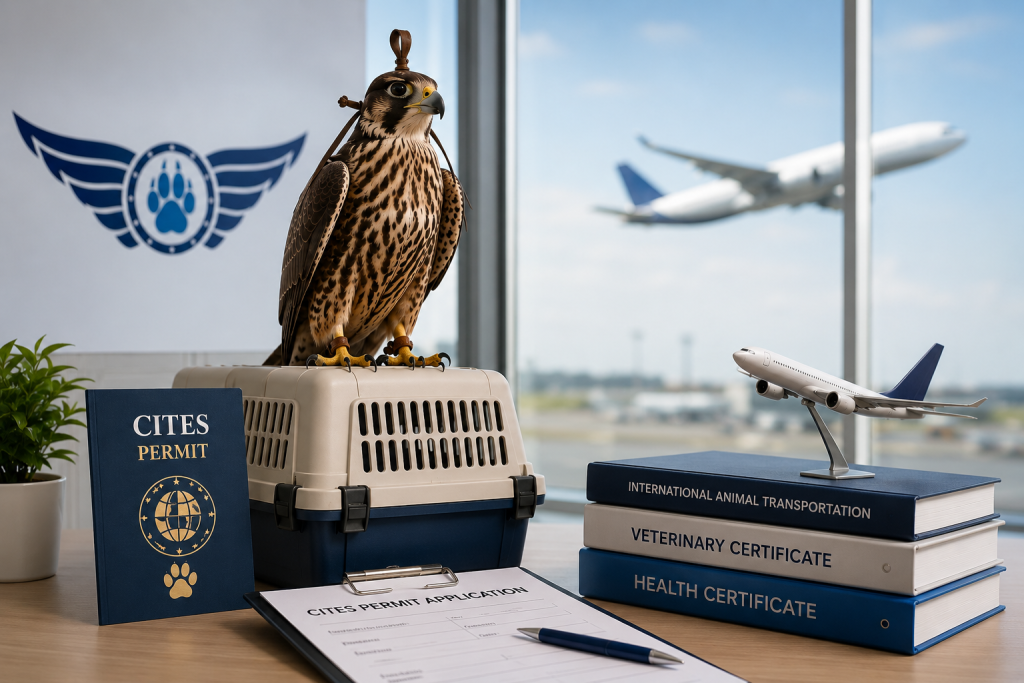

How to Get a CITES Permit is one of the most common questions asked by pet owners planning international animal transportation. Understanding how to get a CITES permit is essential when traveling with parrots, falcons, reptiles, and other protected species. Without the proper documentation, animals may be denied entry, delayed at customs, or prevented from crossing international borders. This guide explains how to get a CITES permit, which documents are required, and how to avoid common mistakes during the application process.
It is especially important to check whether a CITES permit is required for:
- parrots;
- falcons;
- birds of prey;
- reptiles;
- tortoises and turtles;
- exotic animals;
- rare breeds of cats and dogs;
- species listed under CITES regulations.
Delivery Animal helps owners obtain CITES permits and organize international animal transportation worldwide.
What Is CITES
CITES (Convention on International Trade in Endangered Species of Wild Fauna and Flora) is an international agreement that regulates the trade and movement of protected animal and plant species.
The main objectives of CITES are:
- protecting endangered species;
- regulating international trade;
- preventing illegal wildlife exports;
- preserving biodiversity.
Thousands of species are currently covered by CITES, including:
- parrots;
- falcons;
- owls;
- reptiles;
- exotic mammals;
- certain fish and plant species.
How to Determine Whether You Need a CITES Permit
Before transportation, it is important to verify whether the species is listed under CITES.
Permits are commonly required for:
- macaws;
- cockatoos;
- African grey parrots;
- Amazon parrots;
- falcons;
- certain tortoise species;
- iguanas;
- chameleons;
- snakes;
- exotic cats.
Species can be checked through the official database:
If the species appears in the database, a permit may be required.
What Documents Are Required to Obtain a CITES Permit
The following documents are typically required:
- owner identification documents;
- veterinary passport;
- proof of animal origin;
- purchase agreement (if available);
- breeder or kennel documentation;
- microchip information (for some animals);
- photographs of the animal or bird;
- permit application form.
Government authorities may request additional documents depending on the species and country.
How to Get a CITES Permit: Step-by-Step Guide
Step 1. Identify the Animal Category
First, determine:
- whether the species is listed under CITES;
- which appendix it belongs to;
- whether an export permit is required;
- whether an import permit is required.
The complexity of the process depends on the category.
Step 2. Prepare the Documents
Once the category is confirmed, gather all required documentation.
Make sure:
- owner information is accurate;
- documents confirm legal origin;
- the veterinary passport is valid;
- microchip information matches all records.
Errors at this stage are one of the most common reasons for rejection.
Step 3. Submit the Application
Applications must be submitted to the authorized government agency in the exporting country.
Depending on the country, submission may be available:
- in person;
- through electronic systems;
- through licensed agents.
The documents will then undergo official review.
Step 4. Receive the CITES Permit
After approval, the owner may receive:
- an export certificate;
- an import permit (if required);
- additional supporting documentation.
These documents should be retained throughout the transportation process.
How Long Does It Take to Obtain a CITES Permit
Processing times depend on:
- the issuing country;
- the animal species;
- document completeness;
- seasonal demand.
In most cases, processing takes:
- several days;
- up to several weeks.
For international transportation, it is recommended to begin the process at least 1–2 months before travel.
Common Mistakes When Applying for CITES
The most common mistakes include:
- lack of proof of origin;
- incorrect owner information;
- microchip number errors;
- incomplete documentation;
- last-minute applications;
- incorrect species identification.
These mistakes often result in delays or permit rejection.
How to Obtain a CITES Permit for a Parrot
CITES permits are commonly required for parrots.
Frequently regulated species include:
- macaws;
- cockatoos;
- African grey parrots;
- Amazon parrots;
- eclectus parrots.
Authorities typically verify:
- bird origin;
- breeder documentation;
- bird identification;
- veterinary records.
How to Obtain a CITES Permit for a Falcon
Falcons are among the bird species for which CITES documentation is almost always required.
This is especially true for:
- peregrine falcons;
- saker falcons;
- hunting falcons;
- sporting falcons.
Documentation for falcons transported to Middle Eastern countries is often reviewed particularly carefully.
Why Owners Use Professional Services
Obtaining a CITES permit can be challenging because of:
- differing country requirements;
- complex application procedures;
- proof of origin requirements;
- international transportation regulations.
Delivery Animal — International Pet Transportation helps owners:
- determine whether a CITES permit is required;
- prepare documents;
- submit applications;
- organize international transportation;
- provide support throughout the entire process.
Conclusion
Obtaining a CITES permit in 2026 remains a crucial requirement for the international transportation of many birds, reptiles, and exotic animals. The earlier preparation begins, the smoother both the permit process and transportation will be.
A properly issued CITES permit helps avoid border delays, customs issues, and the risk of an animal being denied entry into another country.